Students.
Research is a way of teaching.
Since 2018 I have advised or co-advised 175 people in undergraduate, master’s and doctoral work.
One case first.
I do not think of a student who does research with me as someone in training to become a researcher, and sometimes I tell them so directly: they are learning to solve hard, open problems with no known answer, problems in which they have to make many decisions. I win awards and publish papers, but those are by-products. What matters is the students.
Carlos Manuel Ramírez Acosta.
Carlos Manuel Ramírez Acosta came to my laboratory as an undergraduate, working toward a double degree in Chemical Engineering and Biomedical Engineering. He was also my student in Experimental Design: he is the same Carlos as the testimonial about the pandas. Between 2018 and 2019 he did a special project and his undergraduate thesis with me, the latter on magnetite nanobioconjugates that carry genetic material into cells and release it there.
In August 2019 he started the Master’s in Chemical Engineering, and that is when I changed the way I worked with him. I gave him wings: explore, solve it and tell me, tell me what you need. I learned that way of advising from Katy Kao, my doctoral advisor, who guided me with goals and trust, without supervising every step.
During his master’s we published four papers together, two with him as first author, and in 2025 we wrote a book chapter, which makes him the graduate of the Master’s in Chemical Engineering with the most publications with me: five. Beyond that, in February 2021 he joined the Empresa Colombiana de Productos Veterinarios (Vecol), where he spent almost five years formulating and scaling up biological products for farming, among them an autogenous vaccine for tilapia against Streptococcus agalactiae that Vecol presented to fish farmers in 2024. He applied all that training elsewhere to make useful things. Since November 2025 he has been a regional qualification expert at Sanofi.
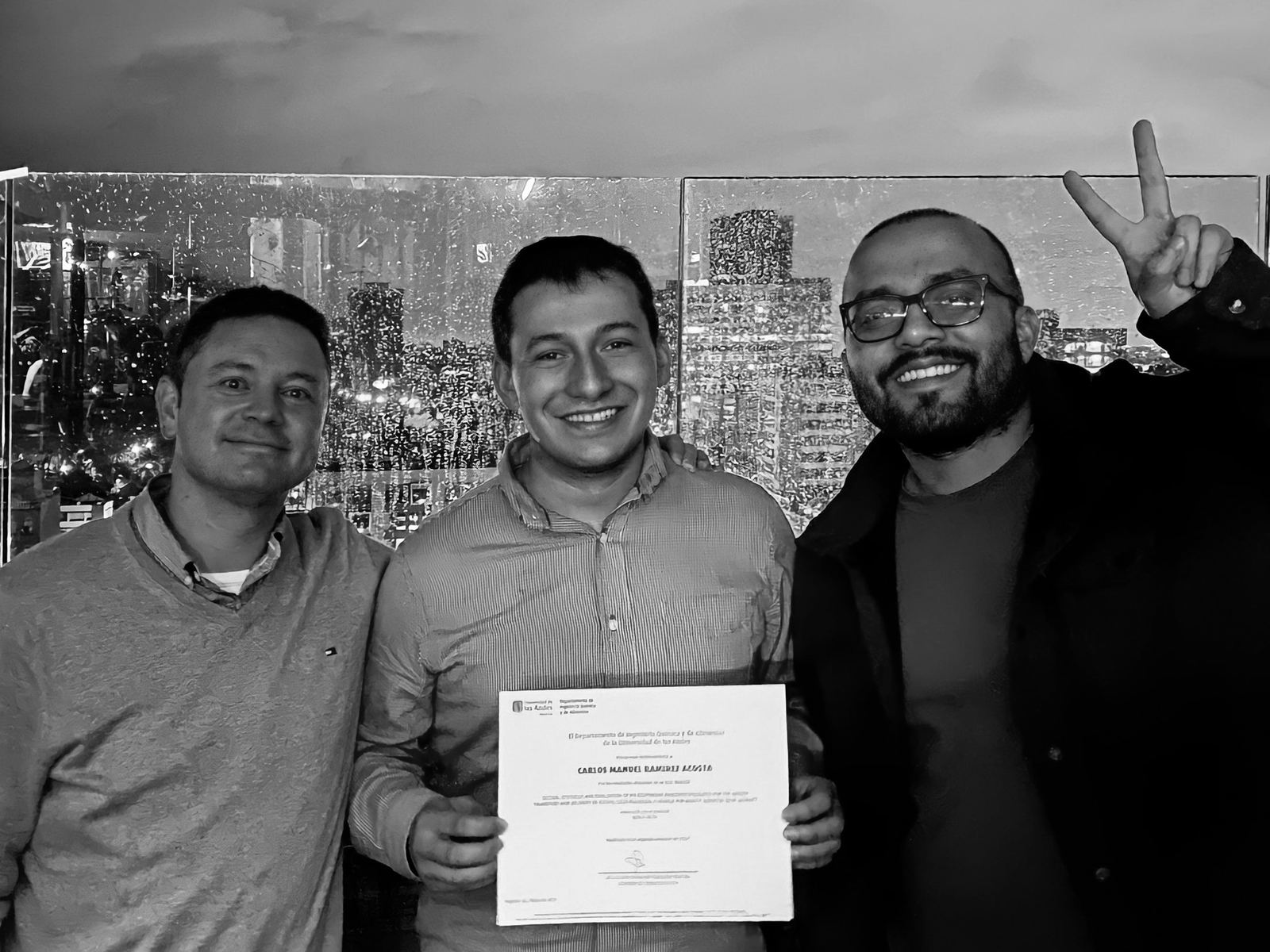
As a thesis advisor, he never just gave direct answers; instead, he equipped me with the tools to find my own solutions, encouraging innovative thinking and a resilient attitude.
Those who kept going.
Most of my undergraduates do one project with me and go their own way, and that is fine. Others kept going with what we started together.
Publishing as undergraduates.
In 2020 two students did their undergraduate thesis with me on immobilizing invertase on magnetite nanoparticles to produce fructooligosaccharides. Three years later they were first and second authors of a paper on kinetic analysis and reactor design in ChemEngineering, with me as last author. In all, 13 of the 131 undergraduates I advised are co-authors of a paper with me.
Learning from each other.
In 2024 Julian Daniel Torres Vanegas, then a doctoral student, and an undergraduate were first and second authors of a paper in Frontiers in Bioengineering and Biotechnology on producing and purifying outer membrane vesicles, the subject of that student’s undergraduate thesis.
On to graduate school, with the same subject.
Some continue in graduate school with the topic they worked on with me: silver nanoparticles synthesized with honey and conjugated with hydrogels, the light sensitivity of beer studied with density functional theory, metal-organic frameworks for drug delivery. Of the undergraduates whose path I know, nine are in a master’s or a doctorate, in Colombia and abroad.
A course that became a school.
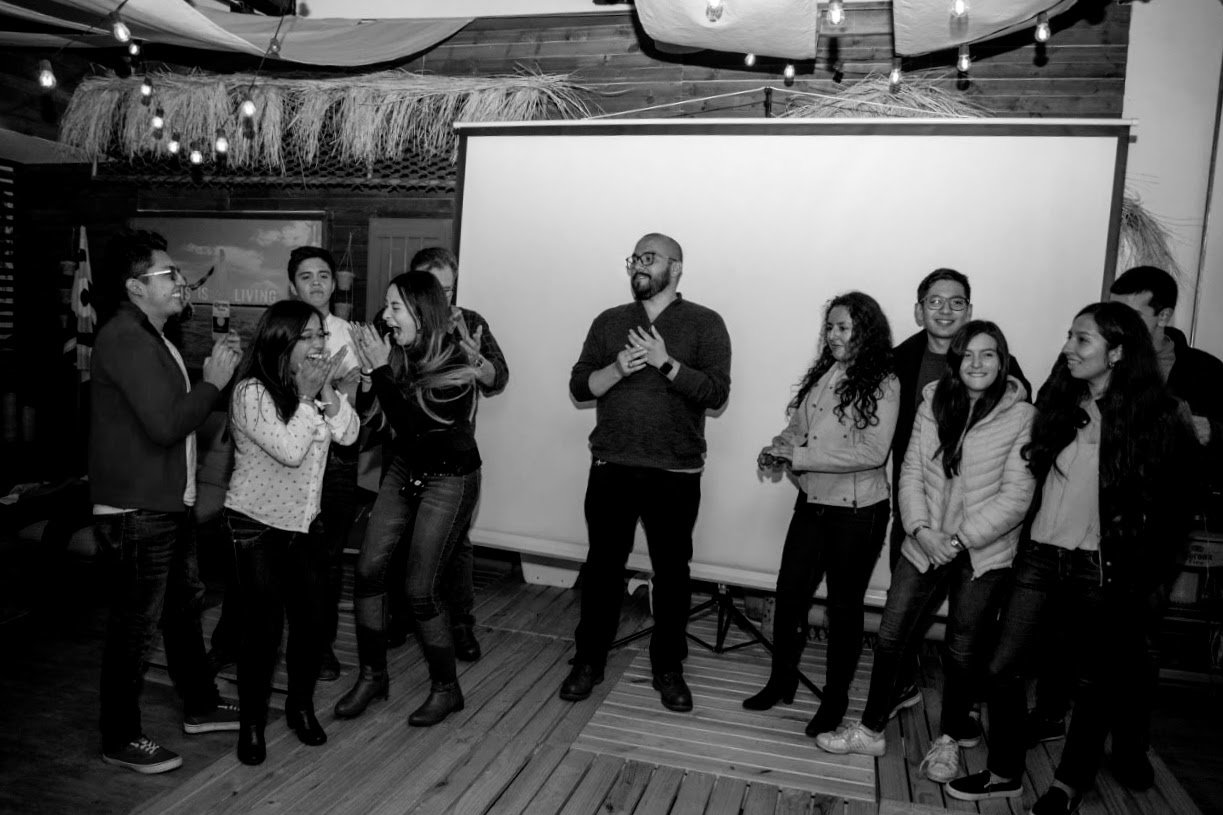
In 2018 I created “From yeast to beer: The scientific principles of brewing”, an elective in which each team designs its own drink and goes through the whole process: malt quality, fermentation, packaging. Everyone who ended up in a brewery took that course, and four founded their own.
Angie Daniela Bolaños Barbosa did her undergraduate thesis with me in 2019, on the effect of trub on the viability of brewing yeast, and then the Master’s in Chemical Engineering (2021-2023), on alginate capsules with yeast and their effect on the sensory profile of beer. She published that work as first author in Polymers in 2023. Today she is a co-founder of Moxacá Brewery.
Three more founded their own: DALA, which began in 2019 as a home-brewing project at the university; Vinicia Cervecería; and Hellish Brewing, in Nariño. Their projects with me went from a low-carbohydrate beer made with a yeast modified through synthetic biology to a biodegradable material made from brewing waste and fungal mycelium, and yeast encapsulated in hydrogels. The pandemic was hard on craft beer, and the founders of Vinicia and Hellish Brewing now work in industry.
Others reached the brewing industry through the course without doing a project with me. Today Central Cervecera de Colombia hosts the visits of my Unit Operations students.
The course, the breweries and the classroom again.
The course
From yeast to beer: each team designs its own drink.
The theses
Trub, encapsulated yeast, brewing waste, a low-carbohydrate beer.
Four breweries
Moxacá, DALA, Vinicia and Hellish Brewing.
The industry
A graduate of the course leads packaging at Central Cervecera de Colombia.
Back to the classroom
Central Cervecera hosts the Unit Operations visits.
“Professor Luis H. Reyes was a fundamental figure throughout my academic career: first as my undergraduate professor, then as my thesis director, and later as my master's advisor. In every capacity, he demonstrated a profound commitment, consistent academic rigor, and a distinct human quality that set him apart. His clear guidance in research, combined with his ability to foster critical thinking and excellence, was key to my professional and scientific development. I am certain that his work is a significant contribution to the education of future generations of students and researchers.”
Where they are today.
Of the 41 master’s and doctoral graduates, I know what 39 do today. Most work in industry, at companies such as Sanofi, MSD, VaxThera, Bavaria, Natura, Sika, PwC or Smurfit Westrock. Four founded their own company: Angie Bolaños, the Moxacá brewery; Juan Manuel Pérez, Insuaecol, where he is technical manager; Laura Daniela León, TOC Studio, a web design and development studio; and Andrés Felipe Leal, Genine Therapeutics, where he is Chief Scientific Officer. Two are doing a doctorate, at Saarland University in Germany and at the Instituto Tecnológico y de Estudios Superiores de Monterrey (Tecnológico de Monterrey).
Others stayed in academia. Cristian F. Rodríguez, whom I co-advised in the Master’s in Biomedical Engineering, has 12 publications with me, 8 as first author, and is today an instructor at Universidad de los Andes; in 2025 he already co-advised a professional development project with Juan Carlos Cruz and me.
Several employers have hired more than one of my students, undergraduate and graduate.
What the master’s and doctoral graduates do.
- Industry and consulting23
- Public sector1
- Universities and research centers8
- Doing a doctorate2
- Their own company4
- School teaching1
- No information2
Employers with three or more of my students.
- Universidad de los Andes7
- MSD4
- Zimmer Biomet4
- Quala4
- Sanofi3
Doctoral advising.
The four doctorates I have advised or co-advised ended in very different fields, and that is what I am proudest of.
Julian Daniel Torres Vanegas.
The doctoral student of the vesicles paper. He graduated as Doctor of Engineering in 2023, in a doctorate I co-advised with Juan Carlos Cruz, with a thesis on carbon nanoplatforms that carry therapeutic agents into cells. He has four publications with me, three as first author; one of them, from 2025, is our study of the Unit Operations Project course. Today he is an assistant professor at Universidad EAN.
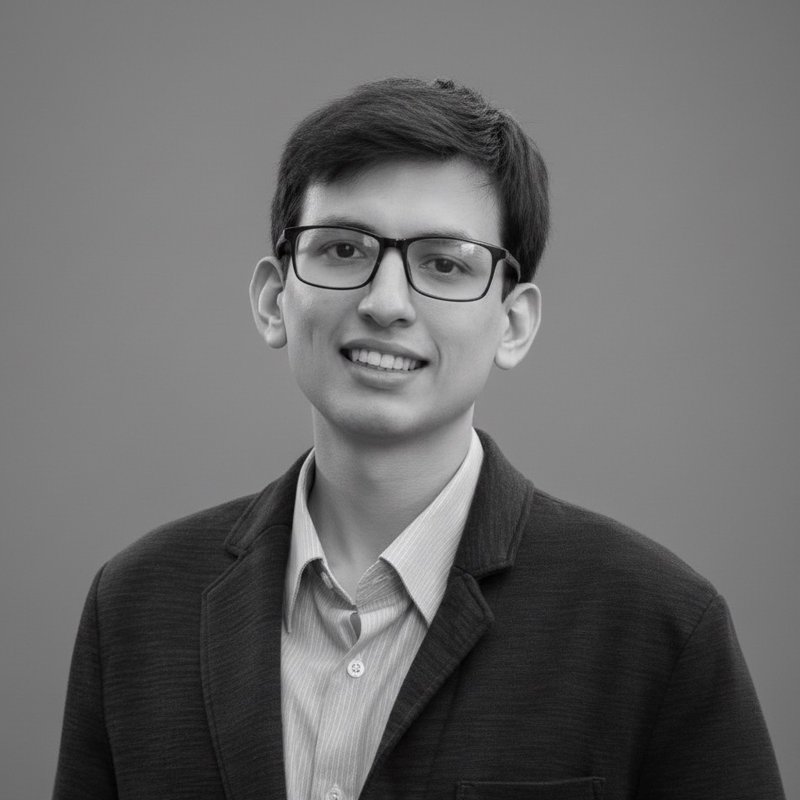
Brayan Rodríguez.
He came from Universidad del Valle after a collaboration on how sound influences the choice of non-alcoholic beers. In his Doctorate in Engineering, which I co-advised with Felipe Reinoso-Carvalho and which he finished in 2025, he studied how sound changes the way we perceive sustainable food; of his six publications with me, he is first author of four. Today he is an assistant professor at Pontificia Universidad Javeriana.
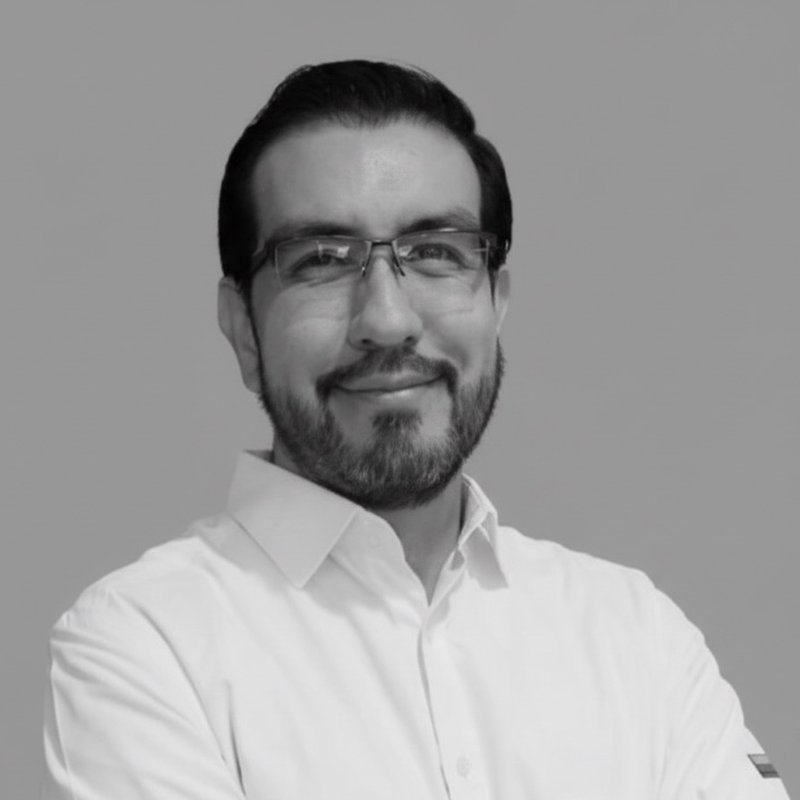
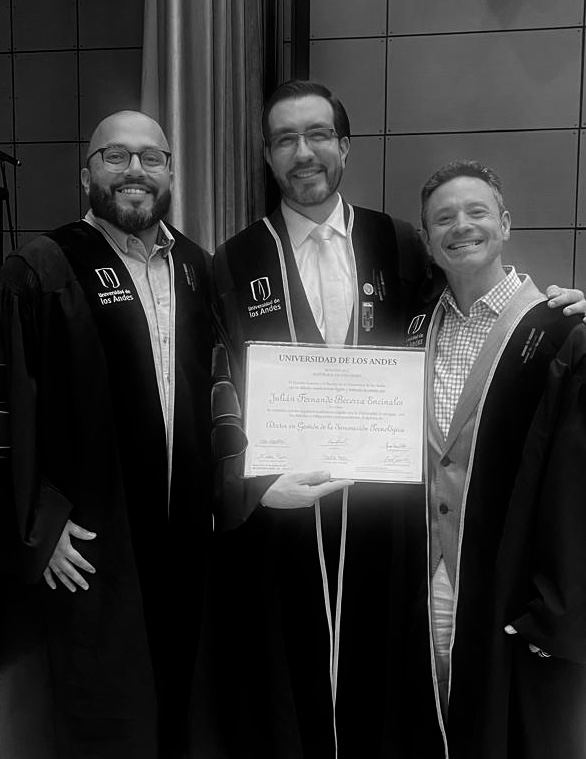
Julián Fernando Becerra-Encinales.
He did the Doctorate in Technological Innovation Management, which Juan Carlos Cruz and I advised and which he also finished in 2025, on a systemic model of technology extension for oil palm farming. He is first author of his six publications with me: three articles and their Spanish translations, published by the journal Palmas. Today he leads technology extension at the Corporación Centro de Investigación en Palma de Aceite (Cenipalma). In 2026 Julián and Brayan published a paper together in Scientific Reports on how oil palm growers adopt sustainable practices.
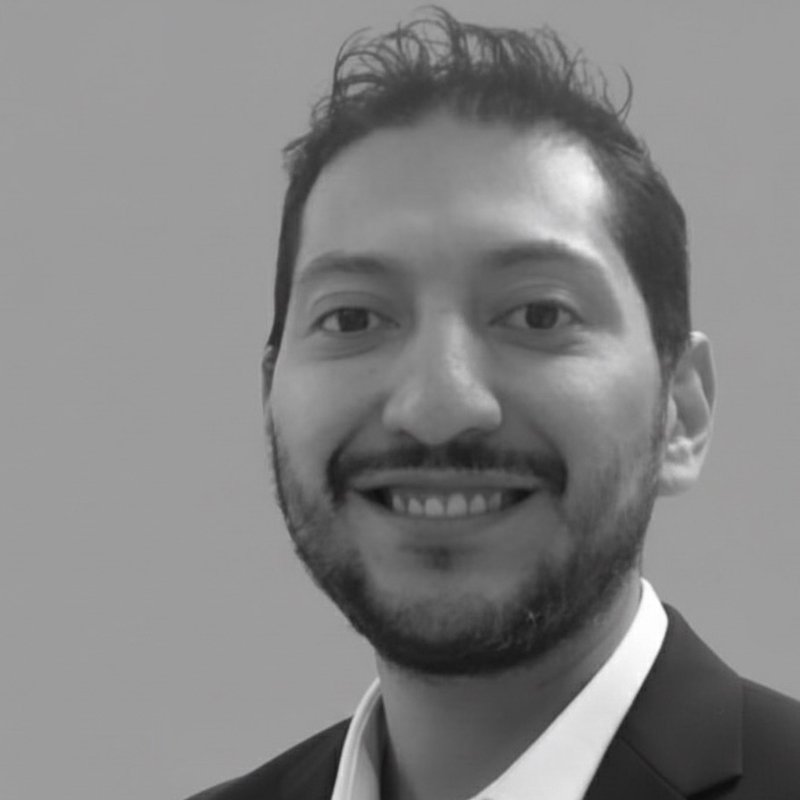
Andrés Felipe Leal.
He did the Doctorate in Biological Sciences at Pontificia Universidad Javeriana (2019-2023), which I co-advised. His project came from the Institute for the Study of Inborn Errors of Metabolism of the Javeriana, where I arrived in 2015 as the only engineer among biologists, microbiologists and pharmaceutical chemists. In his thesis he used CRISPR/nCas9 and non-viral vectors made of iron oxide nanoparticles to edit the genome in two rare diseases, GM2 gangliosidoses and mucopolysaccharidosis IVA. With that work we received in 2023 the award for the best scientific research in human health of the National Academy of Medicine of Colombia and the honorable mention in Exact, Physical and Natural Sciences of the Fundación Alejandro Ángel Escobar. He is first author of his three publications with me and today is co-founder and Chief Scientific Officer of Genine Therapeutics, in Bogotá.
The four theses deal with nanomedicine, sensory perception, agricultural extension and genome editing, and they share something I defend in my teaching philosophy: with solid fundamentals you can move between disciplines without starting from zero.
My teaching philosophy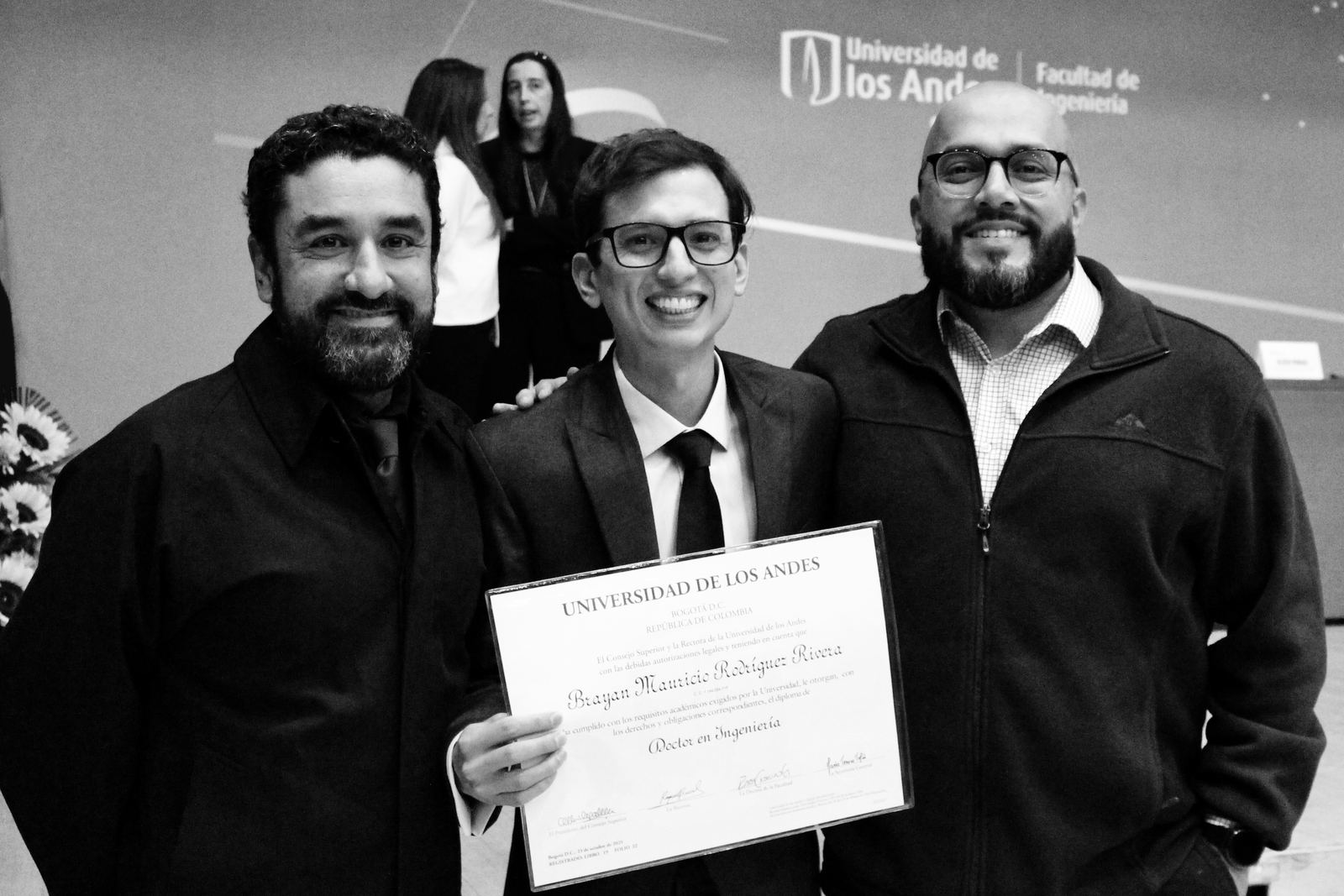
Three doctorates in progress.
Martha Lizeth Castellanos Ordóñez
Developing an integrated management system for innovation and process optimization in odor control at the El Paraíso Hydroelectric Plant.
Martha Liliana Díaz Bustamante
Applying a multiscale approach to bioproduct design in dairy and cocoa production.
Carlos Yesiel González Murcia
Doctorate in Engineering at Universidad de los Andes, since 2026-20. Explores Colombian biodiversity in search of native yeasts for brewing beer. Advised by Nicolás Ríos Ratkovich and co-advised by me.
In their words.
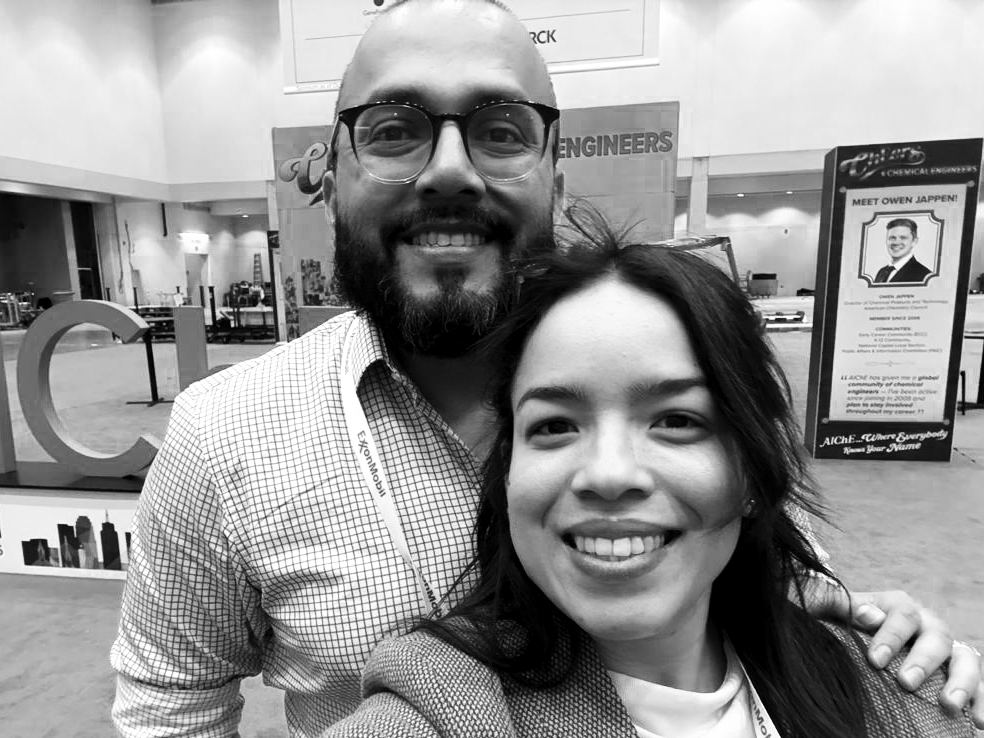
Several of the students I advised wrote about what it was like to work with me.
Almost all of them speak of clear goals, freedom to explore and trust.
“During my doctorate, I had the opportunity to have Luis H. Reyes as my main supervisor. His guidance was characterized by an academic openness that allowed me to explore my own research interests, combined with constant guidance that fostered autonomy in my formative process. Furthermore, his supervisory style was considerate and respectful of my time, offering solid academic guidance while respecting my work rhythms. His approachability, genuineness, and willingness to provide support with resources and tools were fundamental to my growth as a researcher.”
“As my doctoral thesis director, LuisH demonstrated a remarkable capacity for strategic and methodological guidance. His mentorship was distinguished by the combination of academic rigor, business practicality, and sensitivity to the particularities of each student, which helped to maximize my abilities. In my case, his guidance was decisive in structuring and strengthening my doctoral project, providing not only specialized knowledge but also confidence and motivation at every stage of the process.”
“During my doctoral studies, I had the opportunity to be advised by Dr. Luis H. Reyes. I witnessed his attentiveness and assertiveness in guiding my thesis development. He always gave me complete autonomy to resolve situations that arose during experiments and writing.”
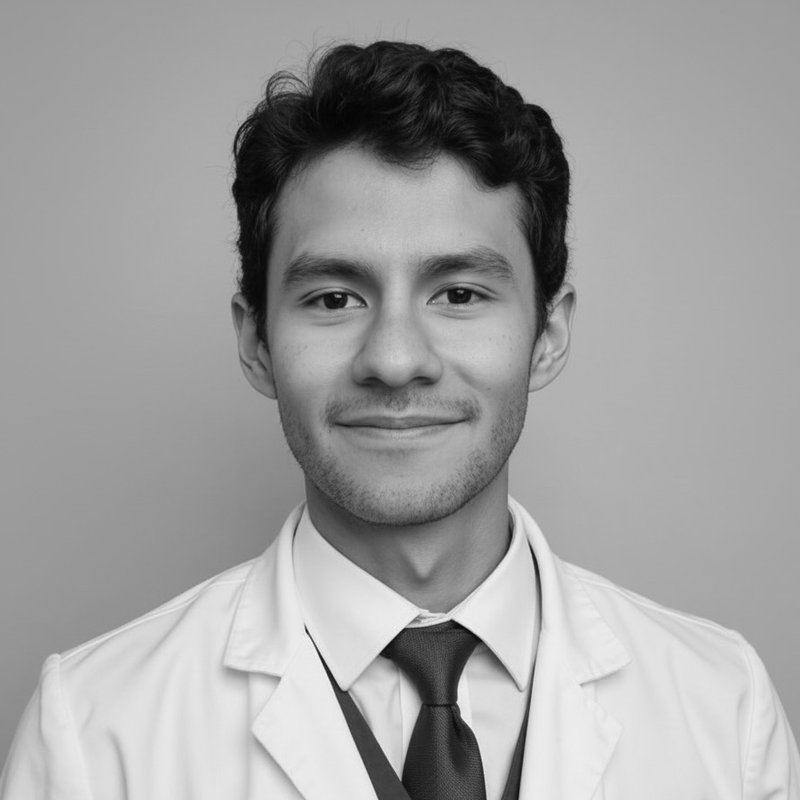
“Professor Reyes's pedagogical approach, centered on project-based work and clear objectives, was decisive in my academic development. His guidance taught me to tackle complex problems with a systematic approach: breaking them down, formulating concrete hypotheses, designing rigorous tests, and executing experiments to validate them. He always encouraged me to understand phenomena in depth, avoiding 'black box' thinking and constantly asking 'why.' This practice strengthened my analytical skills and shaped how I approach research and innovation in the biomedical field today.”
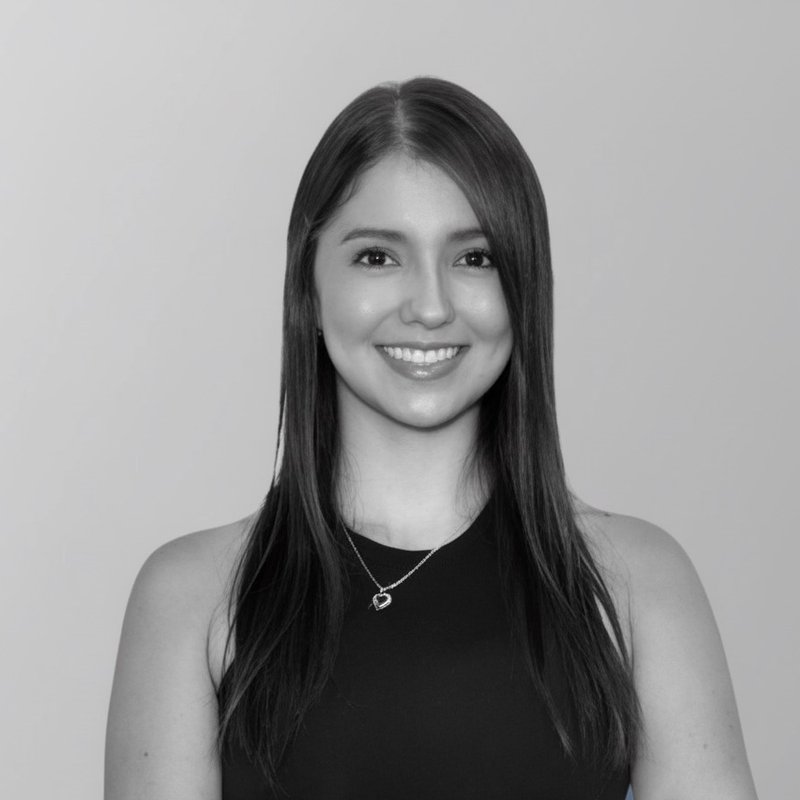
“Working with Professor Luis between 2019 and 2021 was a key stage in my academic and professional development. During that time, I had the opportunity to have his support as my master's thesis advisor and, at the same time, as my supervisor in my roles as a research assistant and teaching assistant for the Unit Operations course. His passion for science and research left a significant mark on me, especially as I began my journey in the world of bioprocesses and biotechnology. Experiencing this stage during the pandemic made his guidance even more valuable; his constant support gave me peace of mind amid the uncertainty and allowed my research project to have a significant impact during a complicated time. Thanks to his guidance, I was able to focus my knowledge in an area I am passionate about, which undoubtedly defined the course of my career.”
“As my thesis advisor, one of the qualities I most highlight is the freedom he provides to explore different paths when difficulties arise. This openness fosters autonomy and critical thinking, while maintaining close and guiding support. Thanks to his guidance, I was able to strengthen my academic and professional capabilities and understand the importance of leadership that combines guidance with trust in the student.”
“Under his mentorship, I participated in a pioneering project on transmembrane peptides and later, as my M.S. thesis co-advisor, he guided my work on an antifungal hydrogel, which led to a patent submission. This experience taught me the importance of developing accessible, scalable methodologies. He conveys the conviction that science must transcend the laboratory to generate a real impact on society.”
“That versatility of Luis H. motivated me to seek him out as my thesis advisor. In this process, we designed an oxygen concentrator for its application in fish farming. During this time, it was evident not only his support in administrative matters, but also his ability to foster an environment of curiosity in which it was possible to question our methods and arrive at creative and 'out-of-the-box' solutions to overcome the challenges that arose along the way.
Today, Luis H. continues to be for me a model of innovation, adaptability, and commitment to teaching.”
“During my doctorate, Luis has been fundamental to my growth as a researcher and also as a person. He has always had the patience to listen to my doubts, to accompany me when I was stuck and to help me find new perspectives when I did not know how to move forward. Although he has taught me to take on my research independently and to recognize that this is my own process, his guidance has made the road feel like real teamwork. With him I can talk not only about academic matters, but also share personal experiences and say what I think without feeling judged. His closeness, his patience and his understanding of the difficulties of doing a doctorate have taken his guidance far beyond the strictly academic. I deeply value everything he has taught me, the trust he has placed in me and, above all, the inspiration he gives me to want to be a better researcher every day.”
“In my humble opinion, Luis H. is the definition of the word vocation. It is inspiring to see someone who is not afraid to become friends with young talents, with different talents and with different ideas.
Since I have known him, he has always sought to improve: to improve his classes, the projects he works on and his surroundings. Around him there is a constant atmosphere of growth and learning. He helps anyone who wants to bring about positive change, and he has no trouble making room in his schedule to guide those processes.
I have no problem saying that Luis is the person who has placed the most trust in me throughout my academic career. I owe him many of the opportunities I have had to push myself and explore new knowledge. He is a great inspiration to me.”
The numbers.
Five of the 175 did both their undergraduate and their master’s work with me, and count only once. One more did a special project with me within a master’s advised by another professor, which brings the total to 175. Today I advise or co-advise three doctoral and five master’s students.
Of the 131 undergraduates, I know where 81 are: 63 work in industry, 9 are doing a master’s or a doctorate, 5 are at universities or research centers and 2 have their own company; for the other 2 I do not know the position. At least 20 work or study outside Colombia.
My students also take their work to conferences. Since 2017, 33 of the 42 talks I sign carry the name of at least one of them, and in 27 the first author is one of my students: 22 different students.
Almost two out of three of the people in the academic record, 93 of 145, I advised together with a colleague, and with 13 different colleagues. With Juan Carlos Cruz, from Biomedical Engineering, I co-advised a good part of the group, and he is also my most frequent co-author. We are friends, and our research subjects also complement each other very well; we have talked about it openly and each of us knows what he can contribute, so the student has two advisors who look at the same problem from different places.
Two advisors, one table.
Co-advising with Juan Carlos is a table, a whiteboard and a student who brings a problem. Olga Lucía Acuña designed a liposomal controlled-release system in her master’s, co-advised with Juan Carlos. Enrique Lozano Gómez did his professional development project on laser ablation in microfluidics in 2025, co-advised by Juan Carlos, Cristian F. Rodríguez and me. Cristian, who did his Master’s in Biomedical Engineering with me, is now an instructor.
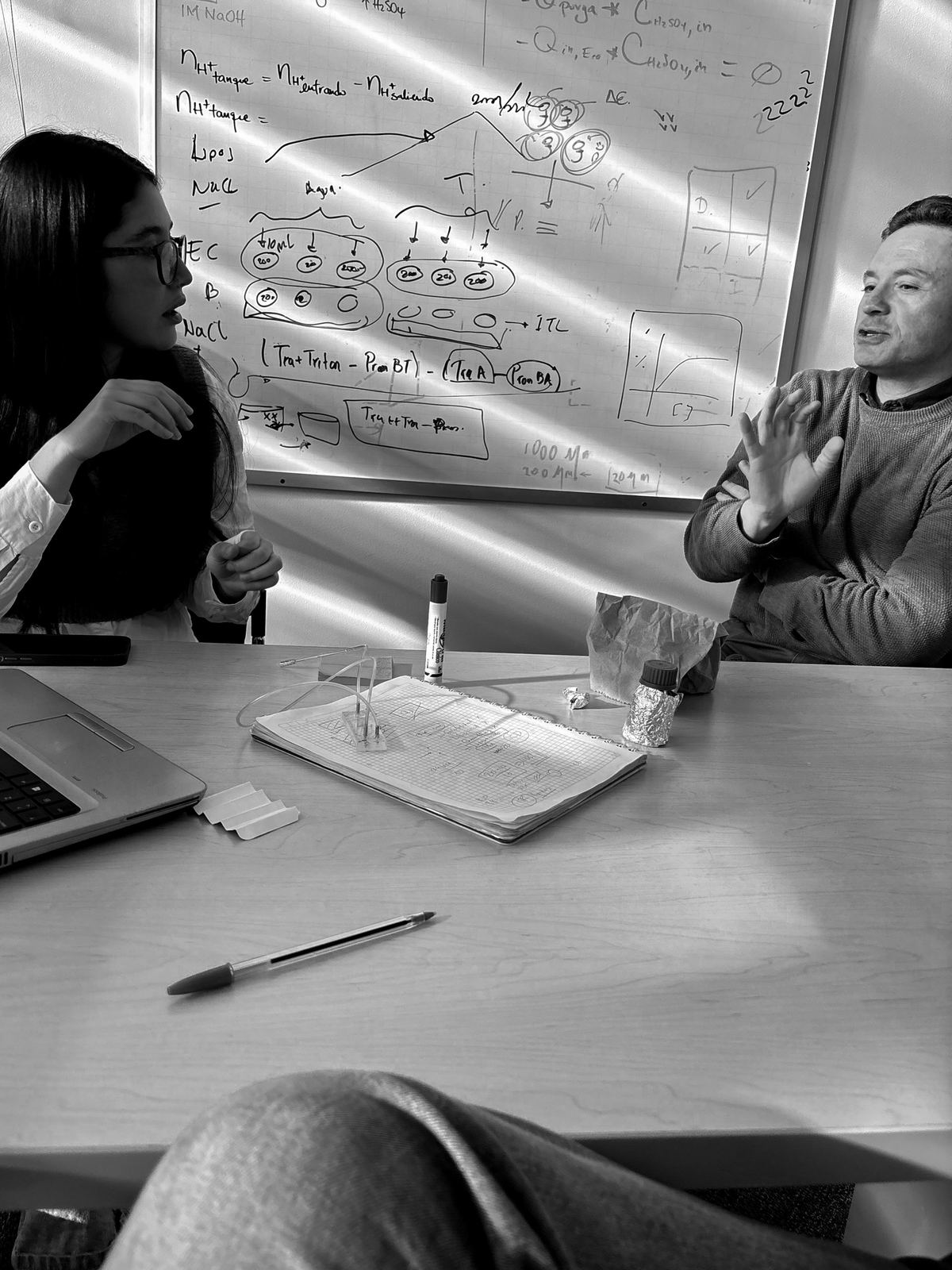
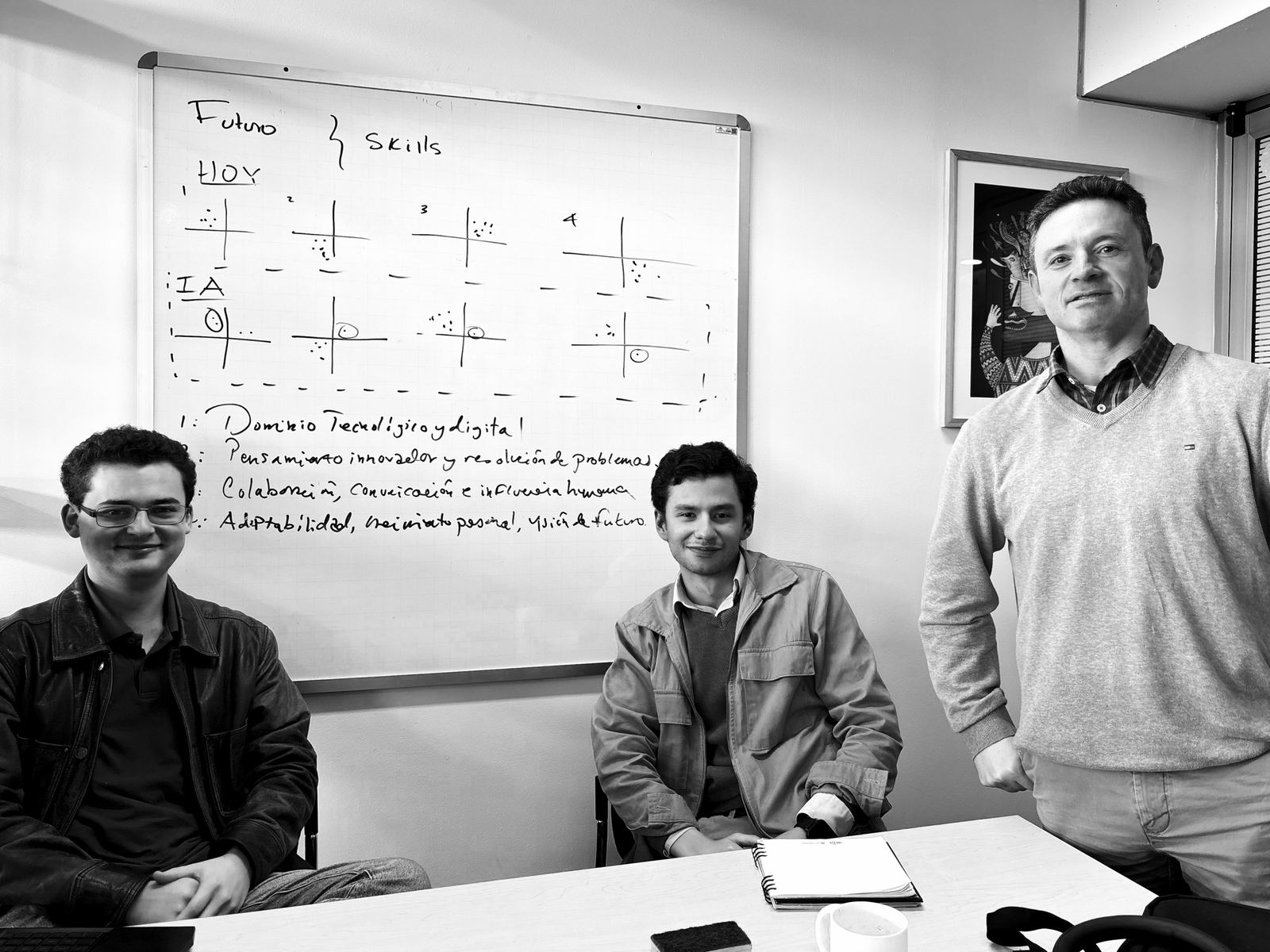
Erika Alejandra Díaz Ramírez, whom I co-advised in the Master’s in Biomedical Engineering and who is first author of a paper in ACS Omega on magnetite nanobioconjugates against melanoma, works in the laboratory with Cristian and Juan David Sánchez Corzo.
The undergraduates.
Since 2018-10, the University’s academic record counts 131 undergraduates I advised or co-advised, in undergraduate theses, special projects and professional development projects.
By year of their first project.
- 201811
- 201930
- 202010
- 202119
- 202222
- 202317
- 202413
- 20256
- 20263
By type of project.
- Undergraduate thesis68
- Professional development project57
- Special project20
- Master’s special project5
Where they are today.
- Industry63
- Graduate school9
- Academia5
- Own company2
- No data2
Which industries.
- Consulting, technology and services15
- Food and beverages13
- Cosmetics, flavors and fragrances9
- Health, pharmaceuticals and medical devices9
- Engineering and equipment6
- Biotechnology, chemicals and materials5
- Environment and sustainability4
- Education2