Committees and leadership.
The University’s governance, the GDPP, the elected and appointed roles I have held since 2017, and the evaluation of other people’s work.

The University’s governance.
Between 2022 and 2024 I was the professors’ representative to the Council of the School of Engineering, a post the professors elect. My role was to carry their voice to the Council: in several meetings I took their questions to the Council and to the University’s leadership, and brought the answers back to them.
Since 2021 I have been a member of the School’s Research Ethics Committee, which reviews the protocols of every department, classifies their level of risk and grants ethical approval before any data collection begins. We review about ten cases a week, and sometimes many more: by my estimate, more than 1,800 since I joined, counting only the weeks of classes.
Between 2021 and 2025 I represented my department on the School’s Research and Doctorate Committee, which advises the School Council on the decisions that strengthen research. Earlier, between 2019 and 2021, I took part in the department’s curriculum reform and led its project-type courses on the School’s committee.
The Research Ethics Committee, week by week
1,800+184 weeks of classes × about ten cases
The GDPP.
I directed the Product and Process Design Group (GDPP) of the Department of Chemical and Food Engineering between 2020 and 2023, and took up its direction again in 2025.
Roles, one by one.
Current roles
- 2026–2027
Future Faculty Mentoring Program, AIChE Education Division
Mentor (2026-2027 cohort)
The Future Faculty Mentoring Program of the Education Division of the American Institute of Chemical Engineers (AIChE) pairs senior faculty members of the Division with senior graduate students and postdoctoral scholars who are preparing for their first faculty position. Each mentor commits for one year to a mentoring project with monthly contact.
I am the only mentor from a university outside the United States among the 34 in the 2026-2027 cohort. The program is formally launched at the AIChE Annual Meeting in Minneapolis on November 8, 2026.
- Since 2026
Task Force on Teaching in the Age of AI
Member · University level
A group of professors from different faculties raised, on their own initiative, what generative AI was doing to teaching. The Vice Presidency for Academic Affairs took up that concern and gave the group, eleven of us, an open mandate: it named the subject and left the approach, the method, and the reach of the proposals to us. Participation is voluntary. The group is temporary and dissolves once it delivers.
We read the peer-reviewed literature on what AI does to learning: cognitive offloading, skill atrophy, effort, comprehension. We gather the uses already happening in Uniandes classrooms, and we survey professors and students for a baseline of what is being used and for what. Those inputs feed guidelines, proposals on assessment and classroom practice, and a roadmap with actions and deadlines the University can adopt.
- Since 2025
Artificial Intelligence Global Education Network (AIGEN)
Research Committee Leader
More than 90 universities applied to join AIGEN, the network of the Instituto Tecnológico y de Estudios Superiores de Monterrey (Tecnológico de Monterrey), and 55 were accepted, most of them from Latin America and nine from Colombia. The network works through four committees, and I lead its Research Committee.
In 2025 the network ran the TECgpt Open Edition pilot with 12 universities and the DEC AI Survey for LATAM with 21 universities.
- Since 2025
GDPP (Product and Process Design Group) Director
Director
In 2025 I took up the directorship of the GDPP again.
- Since 2025
Senior Researcher (IS), National System of Science, Technology and Innovation
Minciencias Classification · National level
Senior Researcher is the highest category in the researcher classification of Colombia's Ministry of Science, Technology and Innovation (Minciencias). It is awarded through the National Call for the Recognition and Measurement of Research Groups and Researchers, and requires a sustained record of peer-reviewed production, doctoral supervision, and demonstrated scientific leadership.
- Since 2024
Academia Joven de Colombia
Member · National level
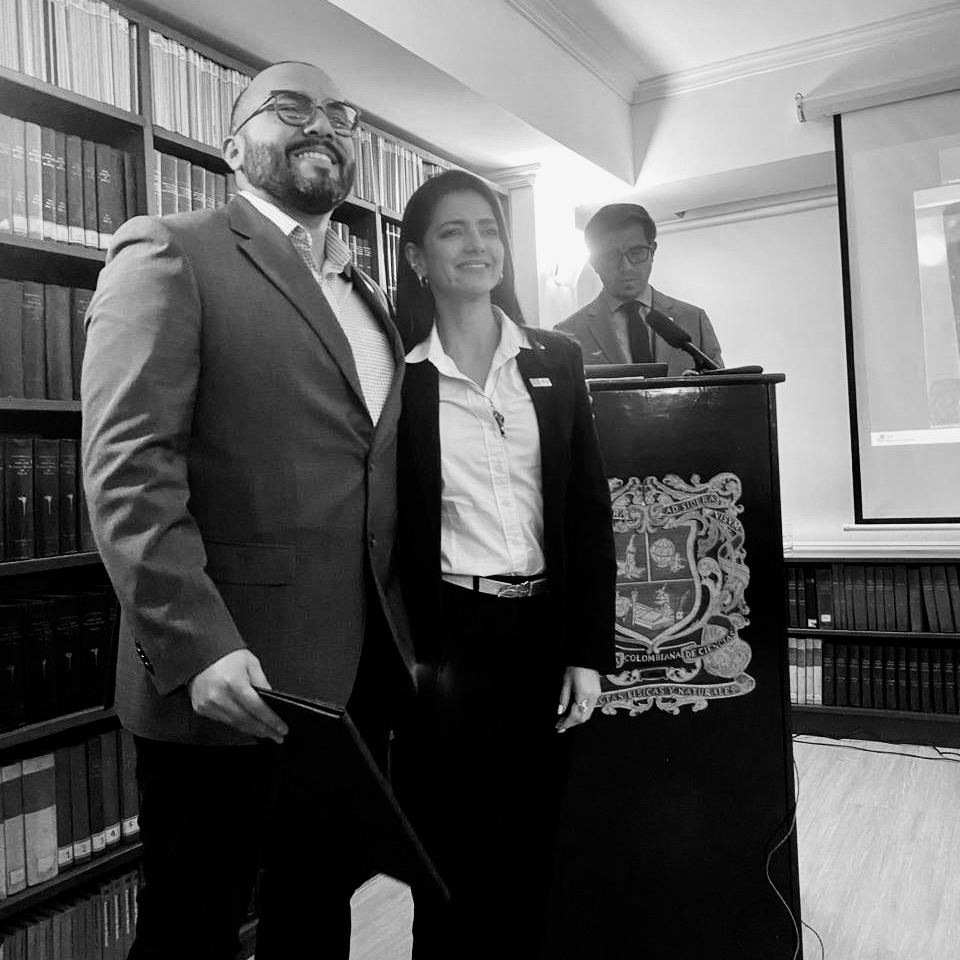
The Young Academy of Colombia is a Special Commission of the Colombian Academy of Exact, Physical, and Natural Sciences, established by a resolution of its Board of Directors.
It is composed of young academics, artists, and scientists with meritorious achievements in their professional performance. The Academy serves as a convergence space where intellectual, cultural, and social differences can be creatively integrated.
- Since 2021
Research Ethics Committee, School of Engineering
Committee Member · School level
As a member of the Research Ethics Committee of the School of Engineering, I am one of three appointed professors responsible for upholding the ethical standards of research involving living beings. The committee operates as a satellite body of the central University Ethics Committee, under Colombian regulations (Resolution 008430 of 1993) and international research ethics standards.
The committee reviews the research protocols of every department of the School, from undergraduate, master's and doctoral projects, classifies their level of risk and grants the ethical approval before any data collection begins; it does not grant approvals retroactively.
We review about ten cases a week, and sometimes many more. By my estimate, that is more than 1,800 cases since I joined in 2021, counting only the weeks of classes.
Earlier roles
- 2024–2026
Augmented Intelligence Uniandes Initiative
Co-founder · School level
What the role involved
An initiative of the School of Engineering, active between June 2024 and the second semester of 2026, to integrate generative AI into engineering courses. Its own page tells my role, its results and its limits.
- 2025
XXXI Inter-American & XXXIII Colombian Congress of Chemical Engineering
Leader of the food engineering thematic area
What the role involved
As Thematic Area Leader for Food Engineering at the joint XXXI Inter-American and XXXIII Colombian Congress of Chemical Engineering held in Cartagena de Indias, I was entrusted with shaping the scientific program for this key area.
This leadership role involved curating technical sessions, guiding discussions on the latest advancements, and fostering collaboration among professionals and academics from across the Americas.
- 2021–2025
Research and Doctorate Committee, School of Engineering
Representative of the Department of Chemical and Food Engineering · School level
What the role involved
The Research and Doctorate Committee advises the Council of the School of Engineering on the decisions that promote and strengthen research in the School.
Our responsibilities include designing strategies to increase research activity, ensuring its quality and impact, suggesting methods for measuring research output, and advising the Dean on resource allocation. We also contribute to the efficient management of research infrastructure and propose strategies for disseminating research findings.
As the representative of my department, I kept in touch with its director and professors and took their views to the committee's discussions.
- 2024
Guidelines for the use of generative AI at the Universidad de los Andes
Contributions on behalf of the School of Engineering · University level
What the role involved
In October 2024 the Universidad de los Andes published its Guidelines for the use of generative artificial intelligence, with recommendations for students, professors, researchers and staff, organized by who uses the tools and for what. The University presents them as a framework that will be updated as the technology changes.
On behalf of the School of Engineering, with Dean Rubby Casallas and Professor Juan Carlos Cruz, I took part in the whole discussion and wrote the first version of the section on the use of generative AI in research. The closing note of the document acknowledges the significant contributions of the three of us to its content.
- 2022–2024
Professors’ representative to the Council of the School of Engineering
Elected by the professors
What the role involved
The professors of the School elect their representative to its Council, which has a voice and a vote in the Council's decisions. My role was to carry the professors' voice to the Council.
In practice that meant listening: in several meetings I took the professors' questions to the Council and to the University's leadership, and brought the answers back to them.
- 2023
Nanotech LATAM Forum, first edition
Member of the organizing committee · School level
What the role involved
I served on the organizing committee of the first edition of the Nanotech LATAM Forum, held by the School of Engineering in the first semester of 2023.
- 2020–2023
GDPP (Product and Process Design Group) Director
Director
What the role involved
GDPP (Grupo de Diseño de Productos y Procesos) is the Department of Chemical and Food Engineering's A1-ranked research group, accredited by the Colombian Ministry of Science. I was appointed as its director for the 2020-2023 term.
My responsibilities included ensuring compliance with the group's strategic objectives, preparing annual performance reports, and promoting interdisciplinary research by managing project proposals for internal and external funding calls.
I also proposed alliances with other research groups and with companies, and kept the group's records of researchers and activities up to date in the national and institutional databases.
- 2019–2021
Curriculum Reform Committee
Committee Member · Department level
What the role involved
From 2019 to 2021, I actively participated in the curriculum reform for the Chemical Engineering program and its integration with the new Food Engineering program. My role focused on designing and framing several project-oriented courses within a new pedagogical model that articulates projects, workshops, and lectures.
A key contribution was incorporating the concept of Integrated Product and Process Design (DIPP) by creating a cohesive structure that linked these new project courses with four other core courses in the program, ensuring a more holistic and applied learning experience for students.
- 2017–2021
AIChE Student Chapter Advisor
Faculty Advisor · Department level
What the role involved
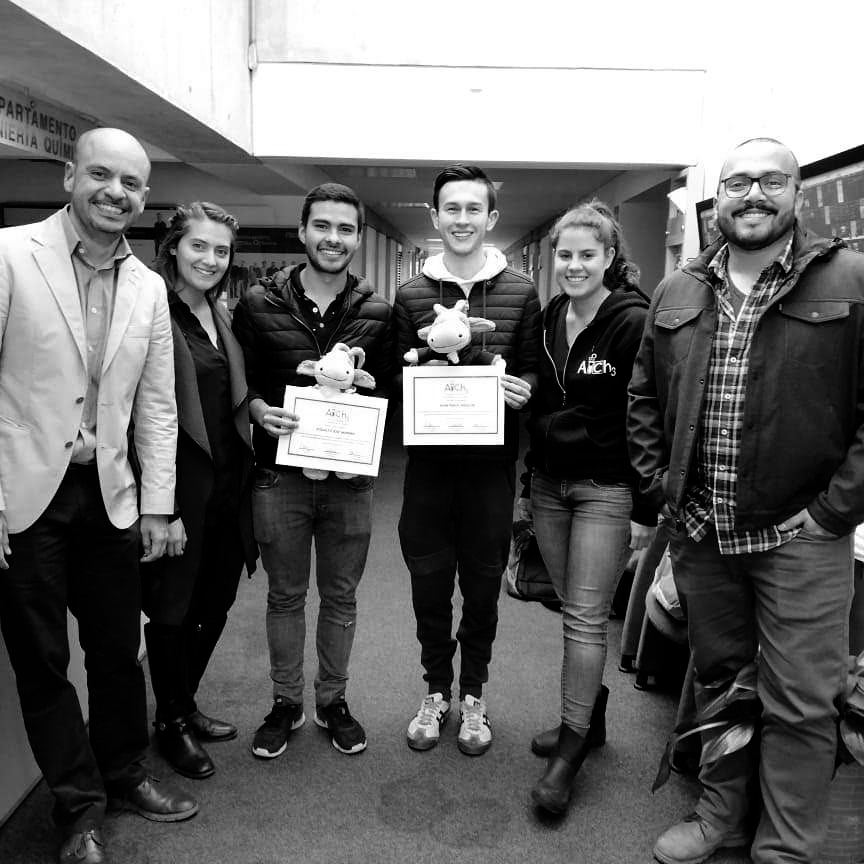
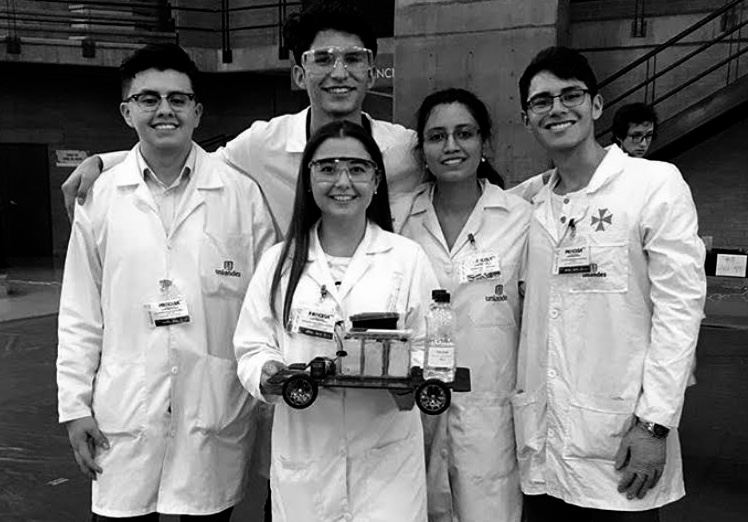
As the faculty advisor for the American Institute of Chemical Engineers (AIChE) Student Chapter, my primary role was to provide guidance and support, with a strong emphasis on fostering academic excellence and research initiatives.
To support student-led projects for competitions like Chem-E-Car, I established the AIChE Research Seedbed. This initiative provided students with the necessary resources, lab space, and a formal structure to conduct research, leading to top rankings in regional competitions for their car design, research paper, and poster.
In collaboration with departmental colleagues, I also encouraged and supported the students in creating the first-ever Transport Phenomena Olympics in 2019. The event, modeled after the long-running Thermodynamics Olympics, was designed to strengthen fundamental knowledge in a competitive and engaging format. While plans to expand it to other universities were paused due to the COVID-19 pandemic, it marked a significant student-led academic achievement.
- 2019–2020
Project-Type Courses Committee
Leader for the Department of Chemical and Food Engineering courses · School level
What the role involved
Appointed by the Dean of Engineering, this committee was composed of professors from various departments, the Teaching Support Unit, the Academic Vice-Dean, and the Academic Coordinator, who served as Secretary. The committee's objective was to define the characteristics of different project types that could be developed within the School's educational spaces as part of a new curricular reform framework.
Our primary task involved collaborative discussions on topics related to the competencies, resources, organization, and evaluation of these project-based courses. The team's insights were gathered in documents such as matrices, tables, and shared files, which were analyzed to produce a consolidated report. This final deliverable, titled 'Projects in the Engineering Curriculum Reform,' was first drafted by the Academic Vice-Dean in July 2020.
Our analysis revealed that while project-based learning was not new to the Faculty, it lacked a standardized format. Explicitly defining the characteristics of various project types helped faculty members identify how their courses fit within these new typologies. This framework also serves as a guide for designing and resourcing the 'project-type courses,' which are a cornerstone of the engineering programs' curricular reform.
Evaluation of others’ work.
Since 2018 I have evaluated 22 proposals in 14 calls. Of those, 15 were for national processes of Colciencias and Minciencias, including those of the General System of Royalties, and in four of those processes I also sat on the evaluation panel. In 2024 I was on the panel that preselected the Colombian proposals for the research grants of the International Centre for Genetic Engineering and Biotechnology (ICGEB), and in 2026 I joined the National Commission of Experts of the Becas para el Cambio call, with eight proposals. The other seven were internal calls of six Colombian universities.
I also evaluate professors. I was an external peer evaluator in two promotions, one to full professor at the Universidad de Antioquia and one to associate professor at the Universidad de Cartagena, and a member of the evaluation committee of a competition to hire career professors at the Universidad Industrial de Santander (UIS). And I have been an examiner outside Uniandes: of a doctoral thesis at the Universidad de Antioquia, of a master’s thesis proposal at the Universidad Icesi and in the Concurso Nacional Otto de Greiff, which awards the best undergraduate theses of eight universities.
The evaluations were done under confidentiality agreements, so they are counted here by type and year; no proposal, code, author or evaluated professor is named.
Proposals evaluated, year by year
Colciencias and MincienciasInternal calls of other universities
| Process | Calls | Proposals | With a panel |
|---|---|---|---|
| Colciencias and Minciencias | 7 | 15 | 4 |
| Internal calls of other universities | 7 | 7 | 0 |
| Total | 14 | 22 | 4 |
Professors
- Evaluation committee of a competition to hire career professorsUniversidad Industrial de Santander (UIS), School of Microbiology, biochemistry area
- External peer evaluator of a promotion to full professorUniversidad de Antioquia, Department of Chemical Engineering
- External peer evaluator of a promotion to associate professor, with an oral defenceUniversidad de Cartagena, School of Engineering
External examiner
- Evaluator of undergraduate theses, appropriate technologies areaConcurso Nacional Otto de Greiff, which awards the best undergraduate theses of eight universities
- Evaluator of a master’s thesis proposalUniversidad Icesi
- Examiner of a doctoral thesis, manuscript and defenseUniversidad de Antioquia