Trajectory.
The decisions that brought me here.

Five stretches.
2001-2007
Undergraduate studies and the decision to do research.
I studied Chemical Engineering at Universidad Industrial de Santander, in Bucaramanga, and graduated cum laude in 2007. In my last two years I did two internships: one at the Ecopetrol refinery in Barrancabermeja (2005-2006) and a research one with Professor Jorge M. Seminario at Texas A&M University (2006-2007), in molecular simulation with ab initio methods and density functional theory. The second gave me my first article, in 2007. Both were demanding, but only one changed the way I saw problems: in research, every question I answered opened into a dozen new ones, and that opening was the point.
I chose the doctorate over industry, and went to Texas A&M thinking I would come back to Colombia to be a professor at UIS.
2008-2013
The doctorate and a way of advising.
I did my doctorate in Chemical Engineering at Texas A&M University, with an emphasis on biology and evolutionary engineering, under the direction of Katy C. Kao, on the adaptive evolution of microorganisms to produce biofuels. In 2012 I did an internship in synthetic biology at Genomatica, in San Diego. Five articles came out of those years, four of them in Q1 journals.
The decision of those years had to do with a way of working more than with a research topic. Katy advised me through goals: she told me where we had to get to and trusted me to find the way. She did not supervise every step, and I wanted to live up to that trust. Without setting out to, I was already training others: two undergraduates from Uniandes, one from UIS and an Egyptian doctoral student passed through the lab with me, and we signed four of my articles from that time together.
That is the way of advising I took from Katy and use with my students today.
By the end of the doctorate I was no longer thinking of UIS: I wanted to be a professor at the best university in Colombia.
2013-2017
Three postdocs and the return.
I finished the doctorate in 2013 and stayed six months as a postdoc at Texas A&M to close the work I had started. That year I was awarded, for two years, the Director’s Fellowship of the National Renewable Energy Laboratory (NREL), one of three given in the United States. I arrived in Golden, Colorado, in 2014, and left after one year.
I came back for four reasons.
- I wanted to be close to the woman who is now my wife.
- I wanted to give back to Colombia the education it had given me.
- I wanted to be a professor here, and Colciencias’ Es Tiempo de Volver programme, which selected me in 2014, appeared at the right moment.
- I was tired of the immigration situation: in nine years in the United States I went through J-1 and F-1 visas, the post-doctoral work permit and an H-1B, and the thought that if I were thrown out of anywhere I would lose the whole journey weighed on the decision.
Leaving a two-year fellowship after the first year had a cost, and I accepted it.
Between 2015 and 2017 I was a postdoctoral researcher at the Institute for the Study of Inborn Errors of Metabolism of Pontificia Universidad Javeriana, the only engineer among biologists, microbiologists and pharmaceutical chemists, and between 2016 and 2017 an adjunct professor at Fundación Universidad de América. Until 2014 I had worked on biofuels; at the Javeriana I began working on rare diseases, on producing an enzyme for Morquio syndrome and on editing the genome with CRISPR/Cas9.
I came to health without looking for it.
I got there when I understood that my chemical engineering fundamentals were enough to move into that field without relearning everything. It was what my professor Álvaro Ramírez taught: once the fundamentals are understood, the rest of the profession falls into place. Both institutions I left kept working with me: in 2020 I published from Uniandes, as director, an article in the line I proposed at NREL, and the work with the Javeriana led to the project that in 2023 received the award of the National Academy of Medicine of Colombia and the honorable mention of the Alejandro Ángel Escobar Foundation.
2017-2020
Assistant professor and the turn toward teaching.
I joined Universidad de los Andes as an assistant professor in July 2017, in charge of Unit Operations and Experimental Design in Chemical Engineering. Between 2017 and 2021 I was adviser to the AIChE student chapter; between 2019 and 2021 I sat on the program’s Curricular Reform Committee and led the department’s project courses in the School’s committee. I have been an associate professor since December 2020, and that same year I was appointed director of the Product and Process Design Group (GDPP), the department’s A1 group, until 2023.
The decision of this stretch was to study my own teaching.
Two years after arriving I was already publishing on the first redesign of Unit Operations, done with Nicolás Ríos Ratkovich and supported by Conecta-TE, and in 2020 on the Chemical Engineering Challenge. I come from an academic culture in which a course was measured by how many failed it: the rule was that twenty percent passed, and whether the students really learned was sometimes set aside. What changed me was talking with many people, and above all with four educators: Diana Carolina Cortés and Sandra Milena Escobar, of Conecta-TE, and María Lucía Guerrero and Alison Reedy, of the School of Education. They helped me see things an engineer does not see alone; Alison and María Lucía are the first two authors of the 2020 study. Another discipline changed the way I see.
In my own department, Óscar Alberto Álvarez Solano, a colleague in Chemical and Food Engineering, has been my mentor in teaching, above all in how to bring creativity into students’ learning. I admit that at first I did not advise with the empathy I do today; I became more empathetic over time.
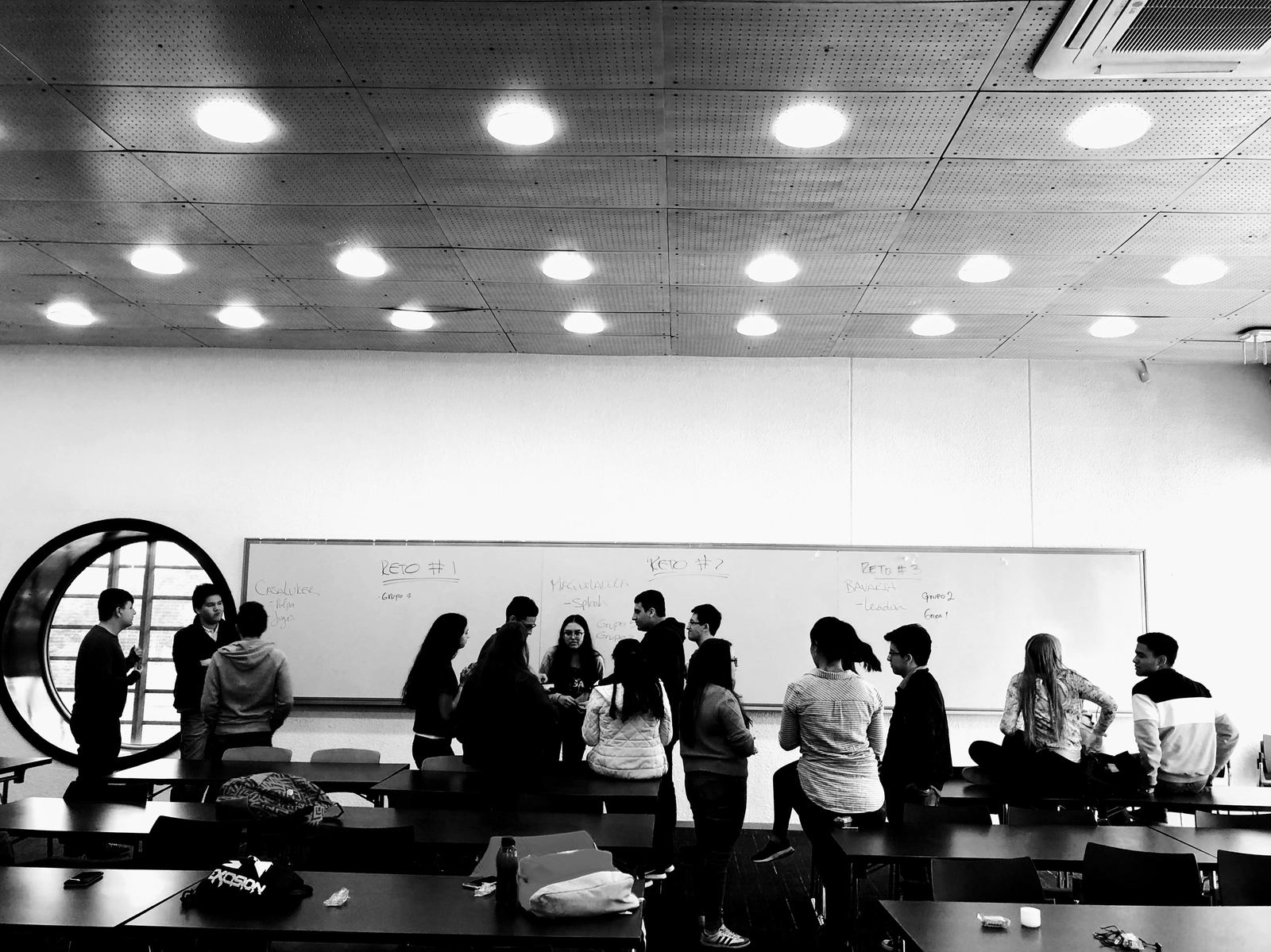
The first Chemical Engineering Challenge, 2019, with the companies’ challenges on the board. 2021-2026
Associate professor: the reform, AI and training at scale.
As an associate professor I have been faculty representative on the Council of the School of Engineering (2022-2024), my department’s representative on the School’s Research and Doctoral Committee (2021-2025) and, since 2021, a member of the School’s Research Ethics Committee. I joined the editorial boards of Education for Chemical Engineers (2022), Scientific Reports (2023) and Discover Biotechnology (2024). In 2024 I contributed to the University’s Guidelines for the use of generative artificial intelligence and co-founded the School’s Augmented Intelligence initiative, which closed in 2026; that year I was elected a member of the Academia Joven de Colombia. In 2025 Minciencias classified me as a Senior Researcher and I returned to lead the GDPP. In 2026 I am part of the faculty task force on teaching in times of AI, and the AIChE Education Division gave me its award for innovation in chemical engineering education.
Two decisions mark this stretch. The first was not to hide a drop.
In 2021 the curricular reform turned Unit Operations into a project course, and the course evaluation, stable for years, fell for three years. I could have fixed the course quietly; I chose to study it, with an independent evaluator who re-graded the work and with the person teaching kept separate from the person collecting the data, and to publish what I found, the drop included. Since 2024 the evaluation has been back at its earlier level, and the full redesign took seven years.
The second was to step outside the undergraduate classroom to guide the use of generative artificial intelligence.
Artificial intelligence did not reach my work in 2024: in 2020 I published, with the University’s Center for Research and Training in Artificial Intelligence, an article whose central method was neural networks. Then the pace changed: generative artificial intelligence arrived abruptly and is being misused on many fronts: in private organizations, in government and in education too. Our position as educators is not to let that happen and to guide its correct, ethical and responsible use, without giving up the potential it has. I have thought about it for years with Juan Carlos Cruz, professor of Biomedical Engineering, with whom I have talked a great deal about how to bring generative AI into teaching without harming students’ learning. That is why, since 2023, I have trained in generative AI professionals who would never set foot in a chemical engineering classroom. In parallel, since 2022 a good part of my research has been done with industry, above all with Enel Colombia. I have not left research, and I will not; I am a researcher after all, and anyone who looks at my articles will see I have researched my teaching since 2019.
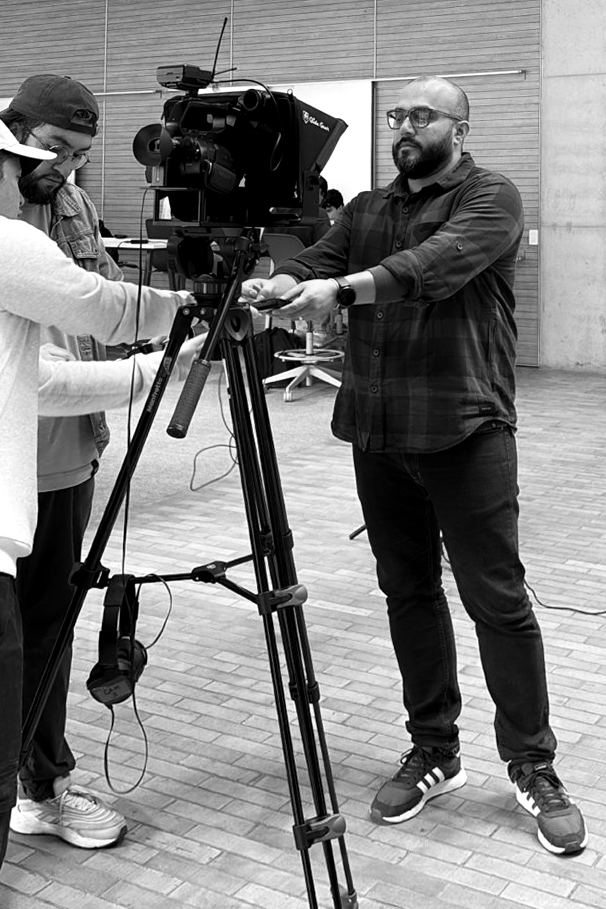
Recording the introduction of the Coursera course on generative AI.
The record.
Academic Background.
- 2008 - 2013
Ph.D., Chemical Engineering (Emphasis in Biology and Evolutionary Engineering)
Texas A&M University · College Station, TX, USA
- 2001 - 2007
B.S., Chemical Engineering
Universidad Industrial de Santander · Bucaramanga, Colombia
Work Experience.
- Dec 2020 - Present
Associate Professor
Universidad de los Andes · Bogotá, Colombia
- Jul 2017 - Dec 2020
Assistant Professor
Universidad de los Andes · Bogotá, Colombia
- Jul 2016 - Jun 2017
Lecturer
Fundación Universidad de América · Bogotá D.C. Area, Colombia
- Mar 2015 - Apr 2017
Postdoctoral Research Associate
Pontificia Universidad Javeriana · Bogotá, Colombia
- Mar 2014 - Dec 2014
Postdoctoral Research Associate
National Renewable Energy Laboratory · Golden, Colorado
- Aug 2013 - Feb 2014
Postdoctoral Research Associate
Texas A&M University · Bryan/College Station, Texas
- Jan 2012 - May 2012
Synthetic Biology Intern
Genomatica · Greater San Diego Area
- Aug 2006 - Jan 2007
Research Intern
Texas A&M University · College Station, TX
- Aug 2005 - Jan 2006
Intern
Ecopetrol · Barrancabermeja, Colombia





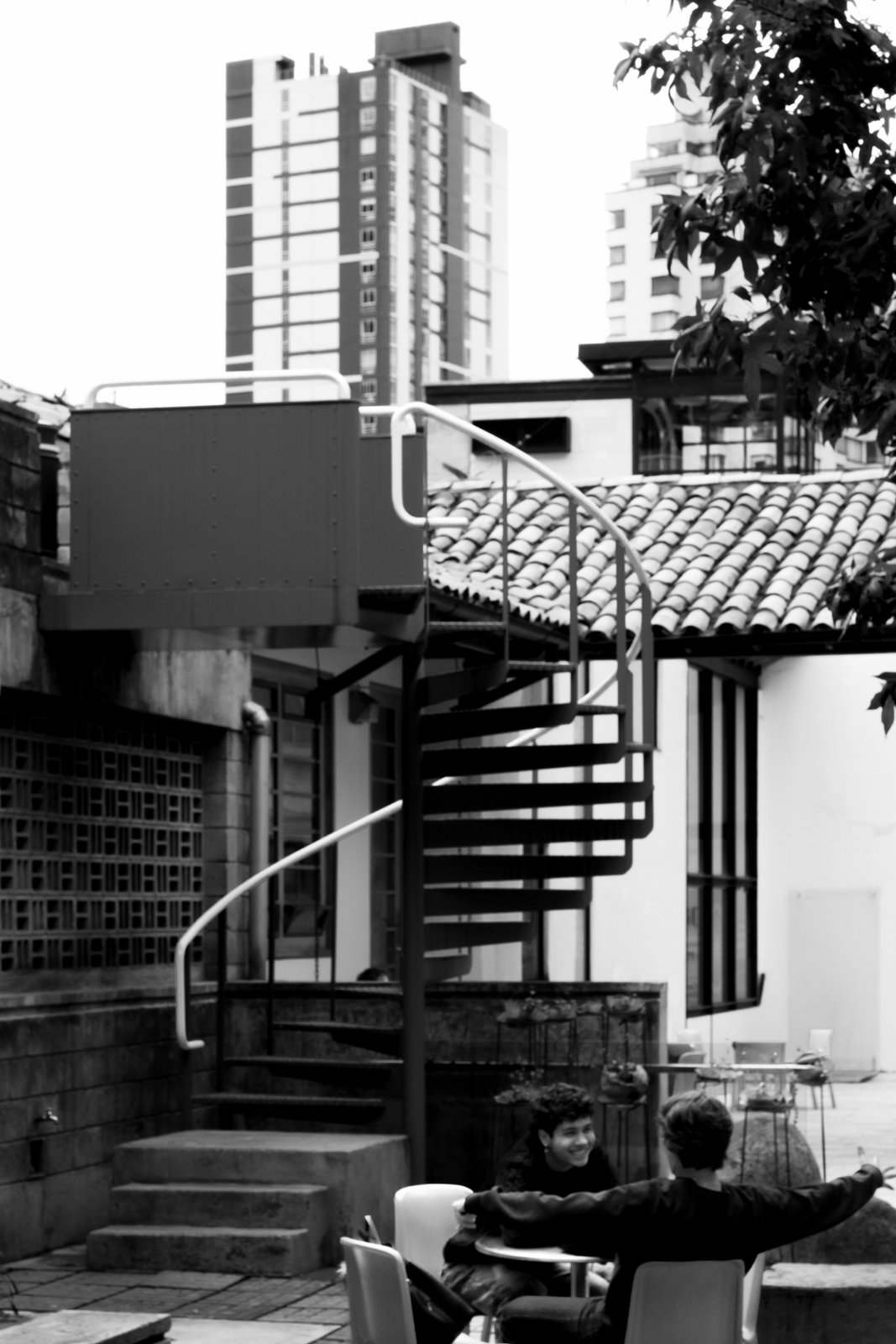

Universidad de los Andes, Bogotá.
Continuing Education & Specializations.
- Mar 2024 - Feb 2025
Online Master in AI & Innovation
Founderz
A comprehensive program focused on the practical application of artificial intelligence, innovation management, and the development of AI-driven products and services.
Prompt Engineering · Chatbot Development · Custom GPTs · Generative AI Tools · Ethics · Innovation Management
- Apr 2024
Prompt Engineering Specialization
Vanderbilt University
Completed a specialization focused on utilizing generative AI like ChatGPT. The program prepared me to leverage AI creatively and efficiently in various professional settings.
Design effective prompts for AI systems. · Enhance productivity and solve complex issues using AI. · Integrate AI into workflows, augmenting human intelligence.
- Jun 2020
Graphic Design Specialization
California Institute of the Arts (via Coursera)
A four-course sequence on the fundamental skills of sophisticated graphic design: process, historical context, and communication through image-making and typography.
Licenses & Certifications.
Assessment in Higher Education: Professional Development for Teachers
Erasmus University Rotterdam · May 2020
Barista Advanced Certificate
JuanBarista Coffee Academy · Nov 2022
Boosting Creativity for Innovation
HEC Paris · Jul 2020
Brand New Brand
California Institute of the Arts · Jun 2020
ChatGPT Advanced Data Analysis
Vanderbilt University · Apr 2024
Empower your workforce with Copilot for Microsoft 365 Use Cases
Microsoft · May 2024
Fundamentals of Graphic Design
California Institute of the Arts · May 2020
Get started with Copilot for Microsoft 365
Microsoft · 2024
Graphic Design Specialization
California Institute of the Arts · Jun 2020
Ideas from the History of Graphic Design
California Institute of the Arts · Jun 2020
Imágenes generativas con Inteligencia Artificial: enfoque fotográfico
Universidad de los Andes, Facultad de Artes y Humanidades · Aug 2026
Ingenierías y Administración
CITI Program · Aug 2025
Industrial Biotechnology
The University of Manchester · May 2020
Innovative Teaching with ChatGPT
Vanderbilt University · Apr 2024
Introduction to Generative AI
Google · Mar 2024
Introduction to Imagemaking
California Institute of the Arts · May 2020
Introduction to Large Language Models
Google · Mar 2024
Introduction to Responsible AI
Google · Mar 2024
Introduction to Typography
California Institute of the Arts · May 2020
Leadership in the AI Era
Platzi · May 2024
Máster Online en IA e Innovación 2024
Founderz · Feb 2025
Prompt Design in Vertex AI
Google · Mar 2024
Prompt Engineering for ChatGPT
Vanderbilt University · Mar 2024
Prompt Engineering Specialization
Vanderbilt University · Apr 2024
Responsible AI: Applying AI Principles with Google Cloud
Google · Mar 2024
Trustworthy Generative AI
Vanderbilt University · Apr 2024
Understanding Financial Markets
University of Geneva · Apr 2022
Workshop on Microbial Genomics & Metagenomics
JGI Joint Genome Institute · Sep 2014