Context.
I joined Universidad de los Andes in July 2017. The conditions in which I teach, do research and serve today are not those of then.

Four things changed. The students, less than people say. Artificial intelligence, more than anyone foresaw. Research, which moved closer to industry. And the University, which built the structure that made my turn toward teaching possible.
Four fronts, 2017 to 2026.
Students
- I join Uniandes and teach Unit Operations
- Curricular reform: Unit Operations becomes a project course
- Second redesign of the course
- The course evaluation recovers
Artificial intelligence
- Neural networks to design antimicrobial peptides
- ChatGPT opens to the public (30 Nov)
- Training in AI for organizations begins
- Task force on teaching in times of AI
Research
- First projects as principal investigator, from public calls
- First project with Enel Colombia as principal investigator
- A good part of the research is done with companies
The University
- Conecta-TE, since 2012, supports my first redesign
- DIDACTA brings together the academic support units
- Guidelines for the use of generative AI (October)
- Comprehensive Development Program 2026-2030 approved (November)
The students.
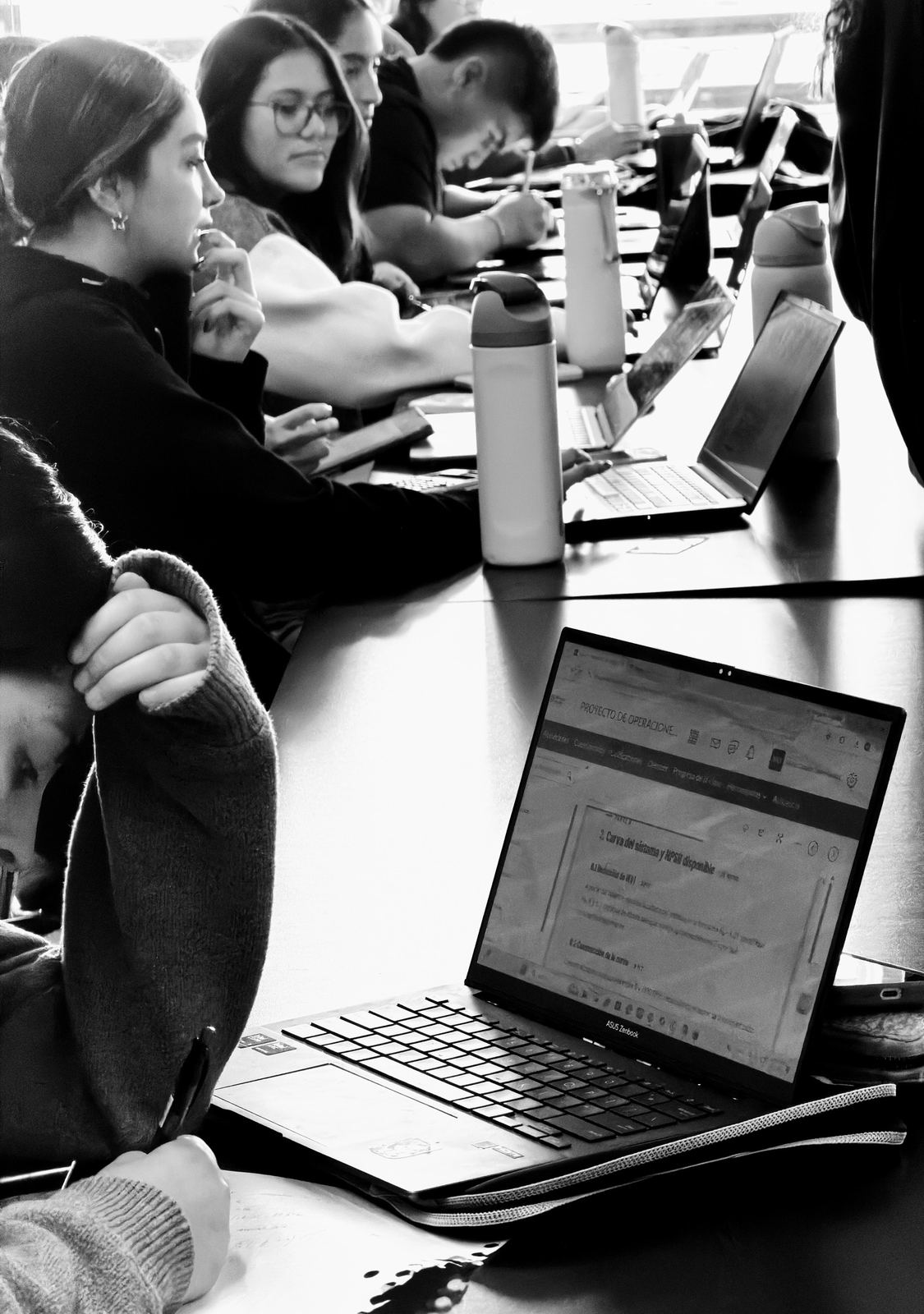
It bothers me when people say that today’s students are not the same as before. What changed was not them: it was their tools and the curriculum with which we receive them. In 2021 the program’s curricular reform turned Unit Operations into a project course, and the evaluations of that course, stable for four years, fell for three years before recovering.
And since late 2022 every student has arrived in class with a language model in their pocket. The surveys I know measure it outside Colombia, but the order of magnitude is clear. Adoption ran faster than pedagogy.
My answer to that is not to say that the students changed. It is to design the course for the student who arrives, with the tools that student brings. That is the idea of the vectors on the home page.
Artificial intelligence.
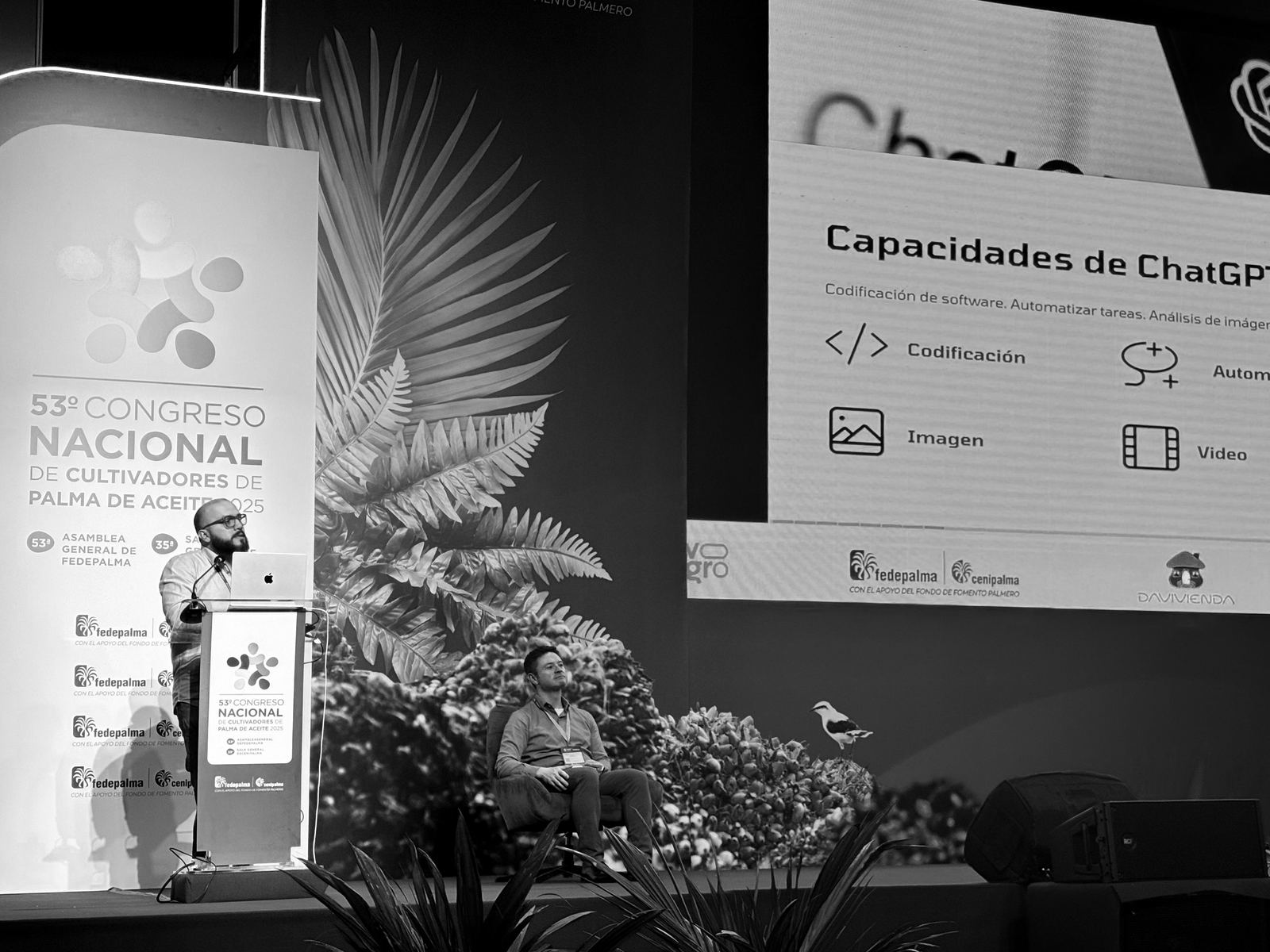
ChatGPT opened to the public on 30 November 2022. In 2020 artificial intelligence was, for me, a research method: I used neural networks to design antimicrobial peptides. In less than two years it became a condition of the classroom. A discourse came with it. The most cited reports, almost all from the English-speaking world and from industry, present artificial intelligence as an amplifier of productivity, and the same argument reached higher education.
What the reports promise.
- 60-70 %
Trillions of dollars a year for the economy, and 60 % to 70 % of employees’ time automatable (a global consultancy, 2023).
- 75 %
75 % of knowledge workers already use AI, and 71 % of leaders would hire someone with less experience and AI skills over someone with more experience and none (31,000 people in 31 countries, 2024).
- 75 %
75 % of students believe AI will help them reach their academic goals more efficiently; in the United Kingdom, the most common reason to use it is to save time.
What the evidence shows.
- −17 %
About a thousand secondary-school mathematics students who practised with an unrestricted chatbot improved a lot in practice and scored 17 % below the control group on the exam without AI.
In the same trial, a tutor that held back the answer avoided much of that harm.
The students who depend most on the tool write better texts without learning more, and the same use widens the gap between strong and weak students.
- 0
controlled studies of learning outcomes with AI in chemical engineering.
The argument is legitimate in a company. In a place of formation it should not be the one in charge, and the evidence explains why. In engineering education there is still no controlled study of learning outcomes with artificial intelligence. That is the gap my critical review, now in final review at Education for Chemical Engineers, points out, and the rule it proposes is the one I defend on the home page: first, do no harm.
Research.
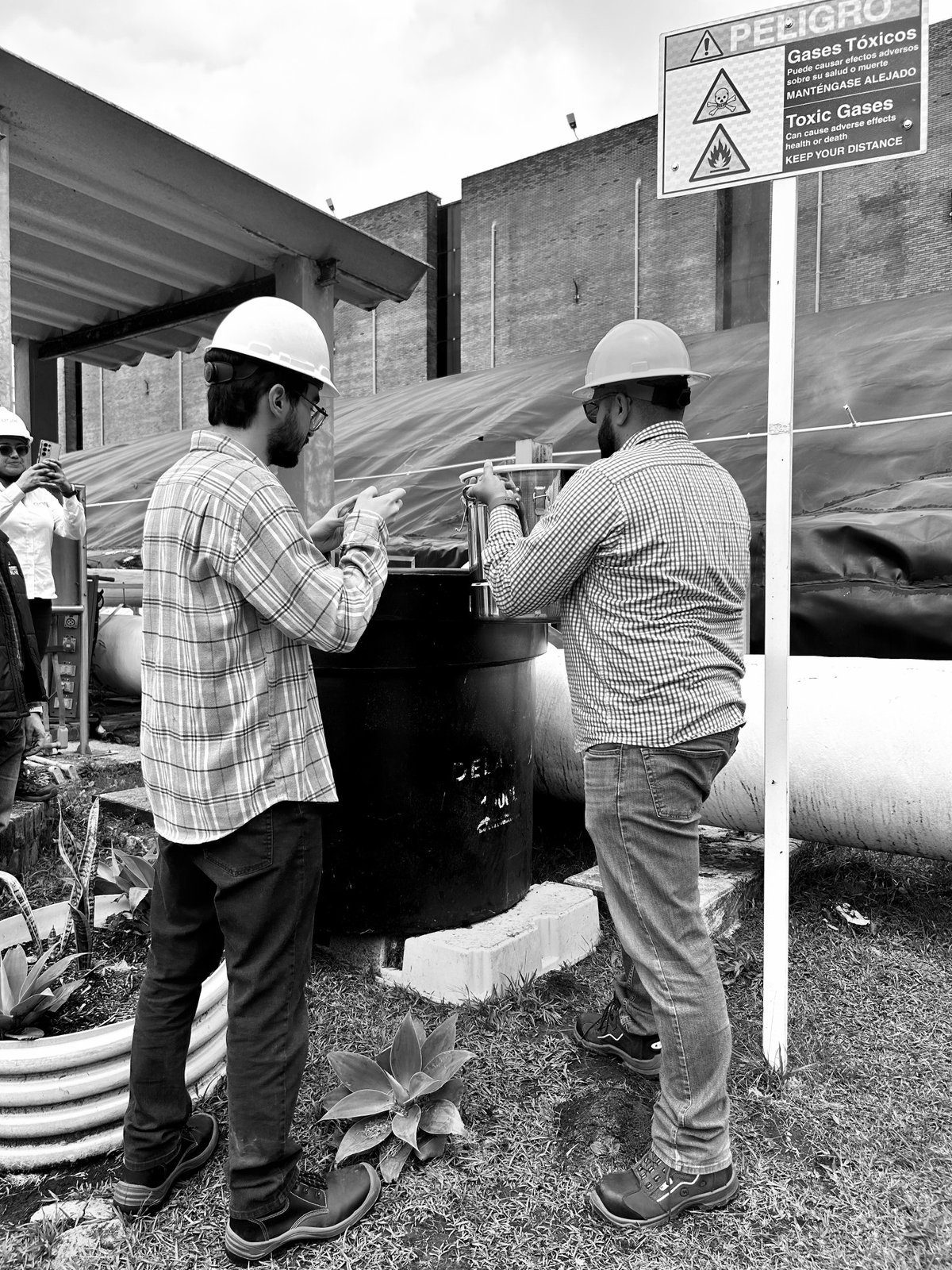
When I arrived, my research was done mostly through projects from public calls: my first projects as principal investigator, in 2019, came from Colciencias and from its successor, the Ministry of Science, Technology and Innovation (Minciencias). Research then moved closer to industry. In 2022 I signed my first project as principal investigator with Enel Colombia, and since 2024 a good part of my research has been done with companies. Since 2023, training in artificial intelligence for organizations has grown every year. That is one of the reasons my research looks more applied today than in 2017.
The University.

The University also changed, in a direction that made possible what I tell in Teaching. Since 2012 it has had a centre that supports pedagogical innovation with technology, the Centro de Innovación en Tecnología y Educación (Conecta-TE), and later a Centre for Teaching and Learning in the School of Education. My first redesign of Unit Operations, between 2017 and 2018, was done with two Conecta-TE advisers, and the study of the Chemical Engineering Challenge was carried out with me by two researchers from the School of Education.
In 2022 the University brought Conecta-TE and other academic support units together in DIDACTA, which today has an evaluation team that measures before and after each innovation. In October 2024 it published its Guidelines for the use of generative artificial intelligence, to which I contributed from the School of Engineering. And the Comprehensive Development Program 2026-2030, approved in November 2025, placed new educational models and digital transformation among its four directions.
The idea on the home page, that the time artificial intelligence frees up should go back to forming people, goes in that same direction, with one condition: doing it with evidence.
Sources.
- Digital Education CouncilGlobal AI Student Survey 2024, August 2024
- HEPI · KortextStudent Generative AI Survey 2025, Policy Note 61, February 2025
- Chirikov, Smirnov & KizilcecScience 392(6800), 818-820, May 2026
- McKinsey Global InstituteThe economic potential of generative AI, June 2023
- Microsoft · LinkedIn2024 Work Trend Index Annual Report, May 2024
- Bastani et al.PNAS 122(26), e2422633122, June 2025
- OpenAIIntroducing ChatGPT, 30 November 2022
- Universidad de los AndesConecta-TE, since 2012
- Universidad de los AndesDIDACTA, since 2022
- Universidad de los AndesPrograma de Desarrollo Integral 2026-2030, November 2025