Scholarship of teaching.
Four research articles, a critical review, six other publications and six conference talks on my own courses.
How it started
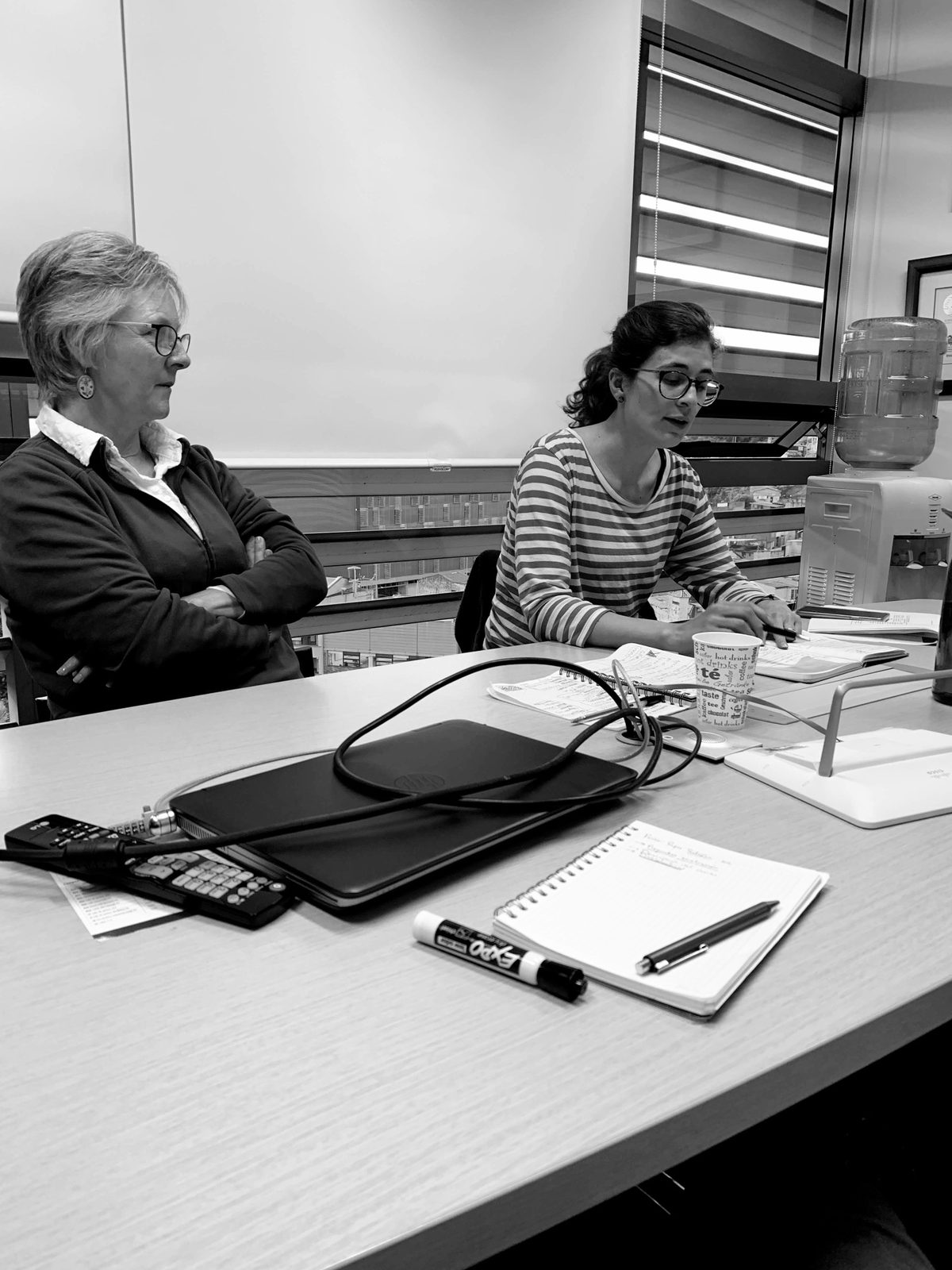
I began researching my teaching in a learning community that Alison Reedy, then a postdoctoral fellow, and María Lucía Guerrero set up at the School of Education for professors who wanted to study their own courses, what is known as the Scholarship of Teaching and Learning (SoTL). Diego Pradilla and I joined with the Chemical Engineering Challenge, which seemed to us a good case of work-integrated learning, and the 2020 article came out of it.
Studying one’s own course carries an obvious risk: that the professor sees what he wants to see. To avoid it I work with education specialists, try to have the data collected by someone who does not teach the course and publish the limits together with the results.
The studies.
- 2019
A survey after the project
Project-based learning in Unit Operations and Modeling and Simulation, analyzed with Legitimation Code Theory, which tells how tightly a concept is tied to its context of application. The centrifugal pump project was assessed with a survey at the end of both courses.
Ballesteros et al. (2019), Education for Chemical Engineers 27, 35-42
- 2020
A qualitative study with separate voices
The Chemical Engineering Challenge. The study analyzed data from students, professors and companies, and the student focus groups were led by Alison Reedy and María Lucía Guerrero, who did not teach the course. Five themes came out of the analysis: the model worked to build creativity and teamwork, and the article points out what to adjust.
Reedy et al. (2020), Education for Chemical Engineers 33, 91-101
- 2021
Formative and summative evaluation over four semesters
The redesign of Unit Operations, followed through each of its stages: an interview with the professor, an entry profile, focus groups and two Likert-scale surveys per semester, with two-way analysis of variance. Co-author from Conecta-TE: Juan Sebastián Sánchez.
Ballesteros et al. (2021), Education for Chemical Engineers 35, 8-21
- 2025
Mixed methods and a comparison across cohorts
Four semesters of the course, from 2022-20 to 2024-10, three as Integrated Project 2 and the last as the Unit Operations Project: Likert-scale surveys with open questions, performance metrics, analysis of variance and Tukey tests for communication, and t tests to compare literature reviews written without AI and with AI governed by the AIAS.
Acuña et al. (2025), Education for Chemical Engineers 51, 64-78
- 2026
A critical review
“First, do no harm”: what the evidence says about generative AI in chemical engineering education. Written with Juan Carlos Cruz.
Education for Chemical Engineers, in final review.
What the 2025 study found.
The 2025 study followed 112 students across four cohorts (Acuña et al., 2025). Written communication improved with statistical significance in a one-way analysis of variance (F = 7.50, p < 0.001), and an independent evaluator, who re-graded documents from different semesters with the same rubric, confirmed it (p between 0.005 and 0.014). Technical performance held steady. Sustained motivation reached 94 % of the students, against 67 % under the previous model.
With AI governed by the AIAS, literature reviews went from about 8 to more than 20 references (p = 0.045). The comparison across cohorts suggests an effect, but does not prove it.
The CASF framework.
With Juan Carlos Cruz I worked out the CASF framework (Cognitive-AI Synergy Framework), which paces the use of AI to the student’s stage of cognitive development and builds on Julián De Zubiría’s dialogic pedagogical model. We did it within the Augmented Intelligence initiative, invited Rubby Casallas and Jesse Padilla, and David Santiago Ramos helped us build the assistant that applies it. The framework shows best in the 2025 preprint, with David as first author. In the 2026 chapter for the Science for Peace and Security series of the North Atlantic Treaty Organization (NATO), Juan Carlos and I tell it from a biotechnology course.
Then came the critical review, and studying the state of the art of generative AI showed us that CASF falls short and has to evolve.
The Augmented Intelligence initiativeIn 2025 OpenAI selected me in the first call of its Global Faculty AI Project, among more than 300 applications from around the world, for this work on AI in the education of engineers.
The presentation at OpenAI AcademyOther publications.
I have also written for a wider audience. In 2023, in the column «Academia y sostenibilidad, un “match” necesario» in Exponotas, written with Juan Carlos Cruz, we argued for project-based learning to teach sustainability, the campus as a living laboratory and partnerships with communities and companies.
- 2026Synergizing Minds and Machines: Harnessing Generative AI for Transformative Biotechnology Education
Juan C. Cruz, Luis H. Reyes
In: Biotechnology and AI: Technological Convergence and Information Hazards (NATOARW 2025). NATO Science for Peace and Security Series A: Chemistry and Biology. Springer, Cham. Pages 297-327 · Book chapter
- 2025Integrating Generative AI with the Dialogic Model in Education: The Cognitive-AI Synergy Framework (CASF)
David S. Ramos, Ignacio Chaparro, Jesse Padilla, Rubby Casallas, Juan C. Cruz, Luis H. Reyes
Preprints.org · Preprint
- 2025Statistical analysis and data interpretation
Luis H. Reyes, Juan C. Cruz
In: Antimicrobial Peptides: A Roadmap for Accelerating Discovery and Development, Elsevier · Book chapter
- 2024Critique: YEASTsim - A Matlab-based simulator for teaching process control in fed-batch yeast fermentations
Juan Sebastian Jaramillo, Luis H. Reyes
Education for Chemical Engineers · Other
- 2023Editorial: The Modern Face of Chemical Engineering in Latin America
Luis H. Reyes, Juan C. Cruz, Oscar Alberto Alvarez Solano
Education for Chemical Engineers, Volume 46, Pages 33-34 · Editorial
- 2023
Academia y sostenibilidad, un 'match' necesario
Luis H. Reyes, Juan C. Cruz
Exponotas 71 · Outreach article
Conference talks.
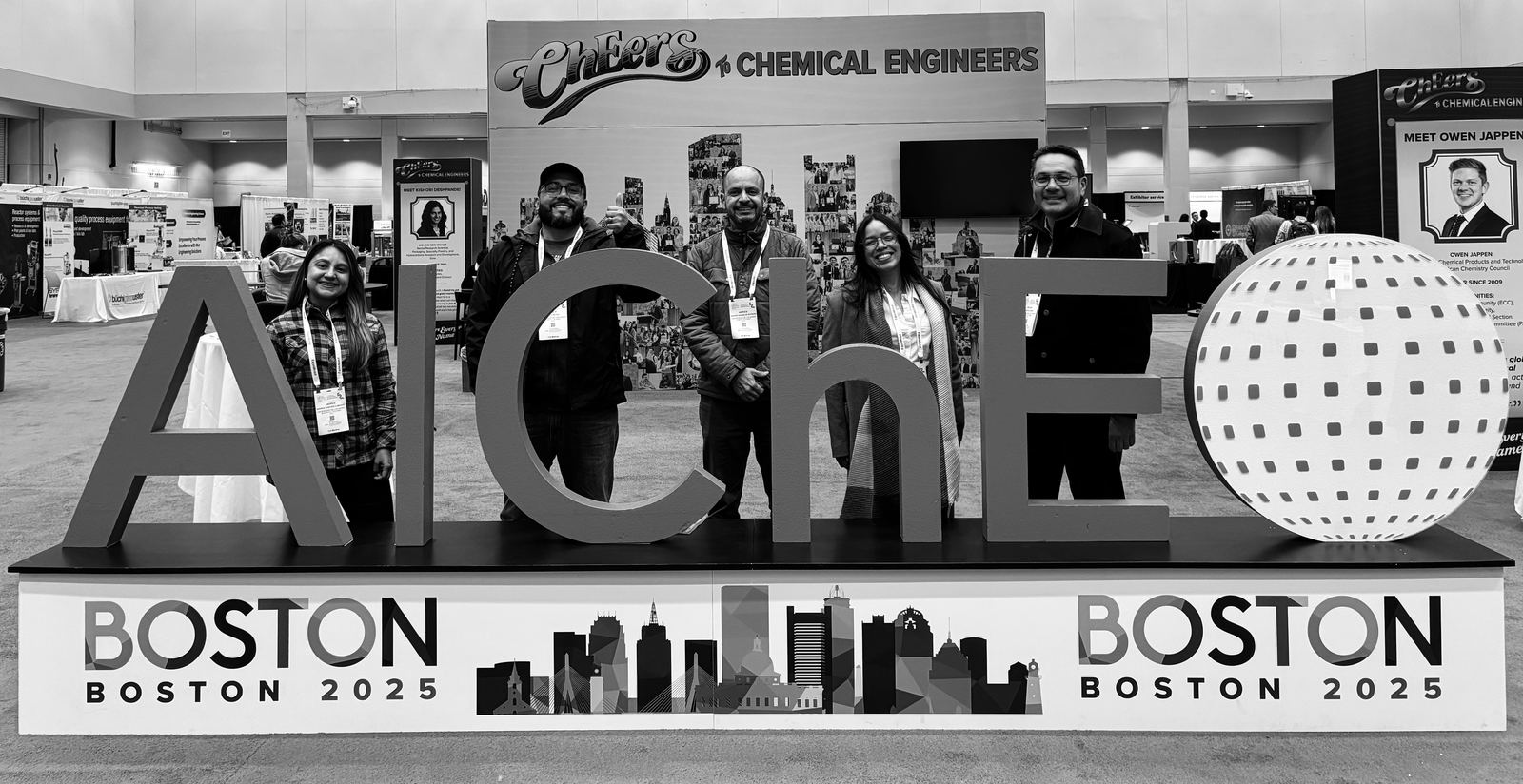
Two at the AIChE Annual Meeting, two at the International Meeting on Engineering Education of the Asociación Colombiana de Facultades de Ingeniería (ACOFI), one at the IFE Conference of the Tecnológico de Monterrey and one at the International Technology, Education and Development Conference (INTED), in Valencia.
- 2026Literacy in generative artificial intelligence, beyond the tools: A multiple case study at the undergraduate level
Carola Hernandez Hernandez, Liliana Maritza Melo-Ramos, Jonathan Alvarez-Ariza, Juan Carlos Cruz, Manuela Fernandez-Pinto, Irma Alicia Flores, Maria Lucia Guerrero, Luis H. Reyes, Andrea Del Pilar Solano Vargas
INTED2026 Proceedings, Article 1677. 20th International Technology, Education and Development Conference, Valencia, Spain · Conference presentation
- 2025Fostering Technical Proficiency and Professional Skills: A Multifaceted PO-PBL Strategy for Unit Operations Education
Olga Lucía Acuña, Deya Marcela Santos Carvajal, Angie D. Bolaños-Barbosa, Julian D. Torres, Oscar Alvarez, Juan Cruz, Luis H. Reyes
AIChE Annual Meeting 2025 · Conference presentation
- 2025Hacia una educación en ingeniería aumentada por IA
Luis H. Reyes, Juan C. Cruz
Encuentro Internacional de Educación en Ingeniería, 2025 · Conference presentation
- 2025
Implementación de un asistente de IA generativa en la enseñanza de fenómenos de transporte biológico: estrategias, resultados y perspectivas
Amelia Serrano, Susana Serrano, Jesse Padilla, Rubby Casallas, Luis H. Reyes, Juan C. Cruz
Encuentro Internacional de Educación en Ingeniería · Conference presentation
- 2025GenAI Strategy – Universidad de Los Andes
Gloria Cortés, Juan C. Cruz, Luis H. Reyes, Rubby Casallas
IFE Conference 2025: Driving the Future of Education with Innovation and Technology, Tec de Monterrey · Conference presentation
- 2019Applying PBL Methodologies to the Chemical Engineering Courses: Unit Operations and Modeling and Simulation, Using a Joint Course Project
Luis H. Reyes, N. Ratkovich, M. A. Ballesteros, M. A. Daza, J. P. Valdés
2019 AIChE Annual Meeting, Orlando, FL · Conference presentation
Written with students.
Three co-authors of the 2025 study are graduates of the research group, and two undergraduates sign the comment on YEASTsim and the CASF preprint.

Olga Lucía Acuña
Jr. Solutions Engineer at Arcaise LLC

Angie Daniela Bolaños Barbosa
Co-founder at Moxacá Brewery

Julian Daniel Torres Vanegas
Assistant Professor at Universidad EAN
Beyond my own courses.
Two projects under way study teaching outside my own courses. One compares feedback generated by AI with feedback written by professors at other institutions and measures its effect on conceptual learning. The other examines how literacy in generative AI actually takes hold across Universidad de los Andes.
- 2025 to 2027
Comparative evaluation of feedback generated by AI and by inter-institutional professors in STEM courses: impact on conceptual learning and student perception
NOVUS Tríada 2025 (Pontificia Universidad Católica de Chile, Instituto Tecnológico y de Estudios Superiores de Monterrey, Universidad de los Andes)
Lead investigator for Universidad de los Andes · In Progress
- 2025 to 2026
Generative AI Literacy at Universidad de los Andes, Beyond the Tools: A Multiple Case Study
Universidad de los Andes (Horizontes Conectados)
Co-investigator · In Progress
Editorial contributions.
Education for Chemical Engineers (Elsevier)
Education for Chemical Engineers is a peer-reviewed academic journal published by Elsevier on behalf of the IChemE. The journal is a primary forum for discussing the ongoing development of chemical engineering education, publishing papers from around the world to create a global network of chemical engineering academics.
Visit the journal- Manuscript evaluation
- Oversee the review and evaluation of manuscripts related to biotechnology, bioprocessing, and bio-related topics within the context of chemical engineering education.
- Special issue development
- Actively propose and coordinate special issues on emerging topics in chemical engineering education, fostering discussions on innovative teaching methodologies and curriculum development.
- Academic and industry impact
- Contribute to the strategic direction of the journal, ensuring the publication of high-quality research that bridges the gap between academic advancements and industrial applications in chemical engineering education.