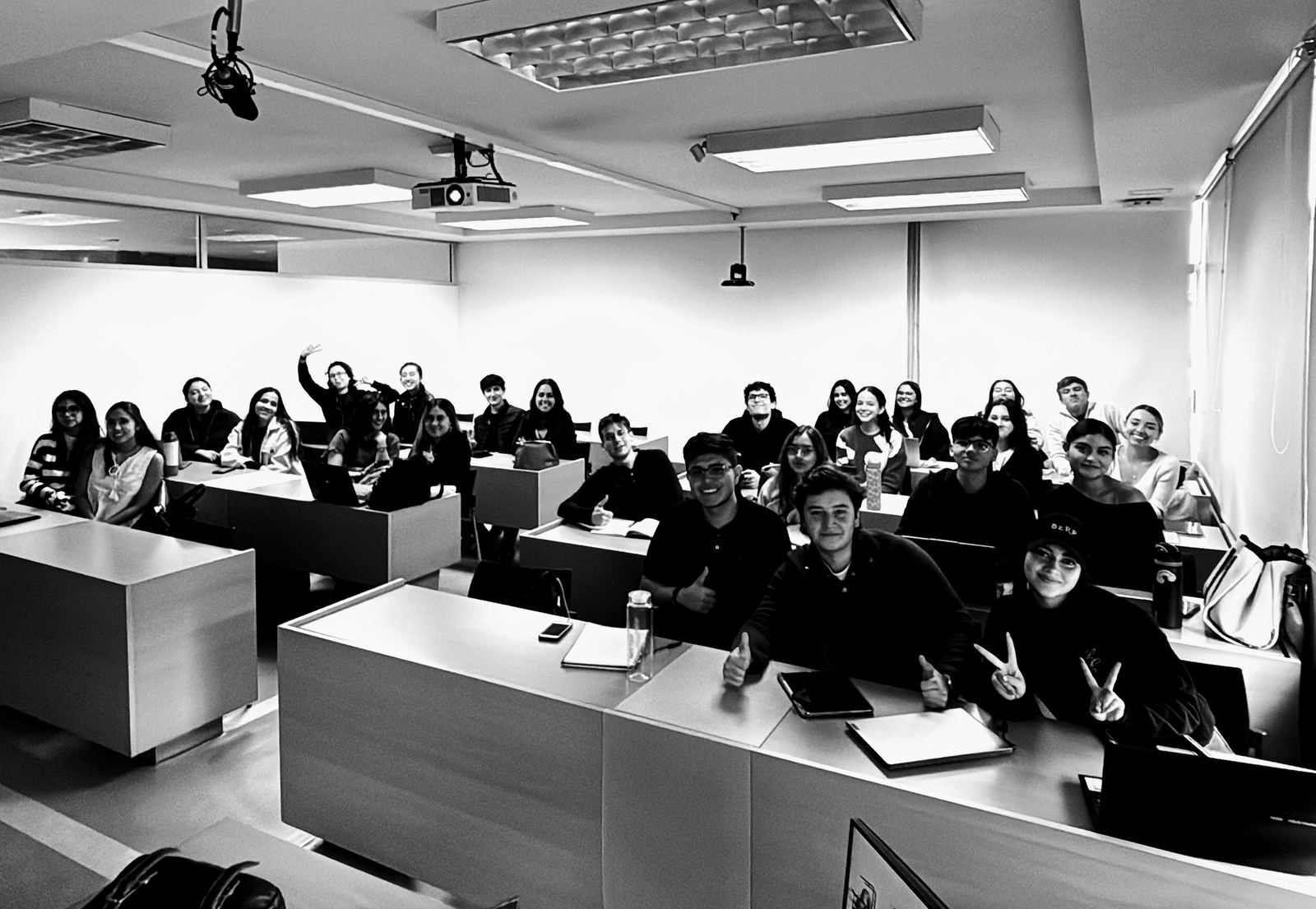
Strategies and materials.
The strategies in my courses recur from one course to the next, and nearly all of them have materials of their own.
Projects
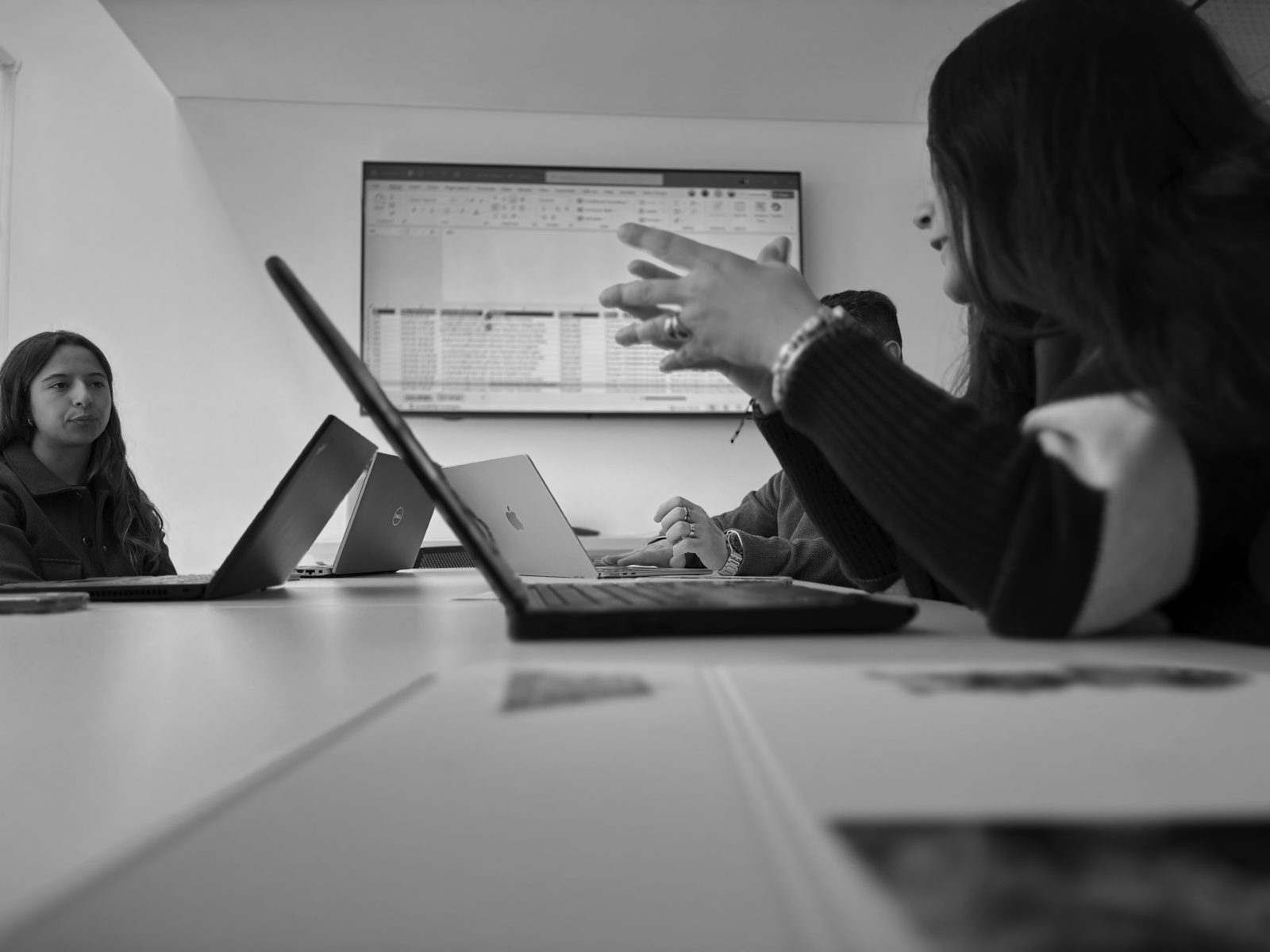
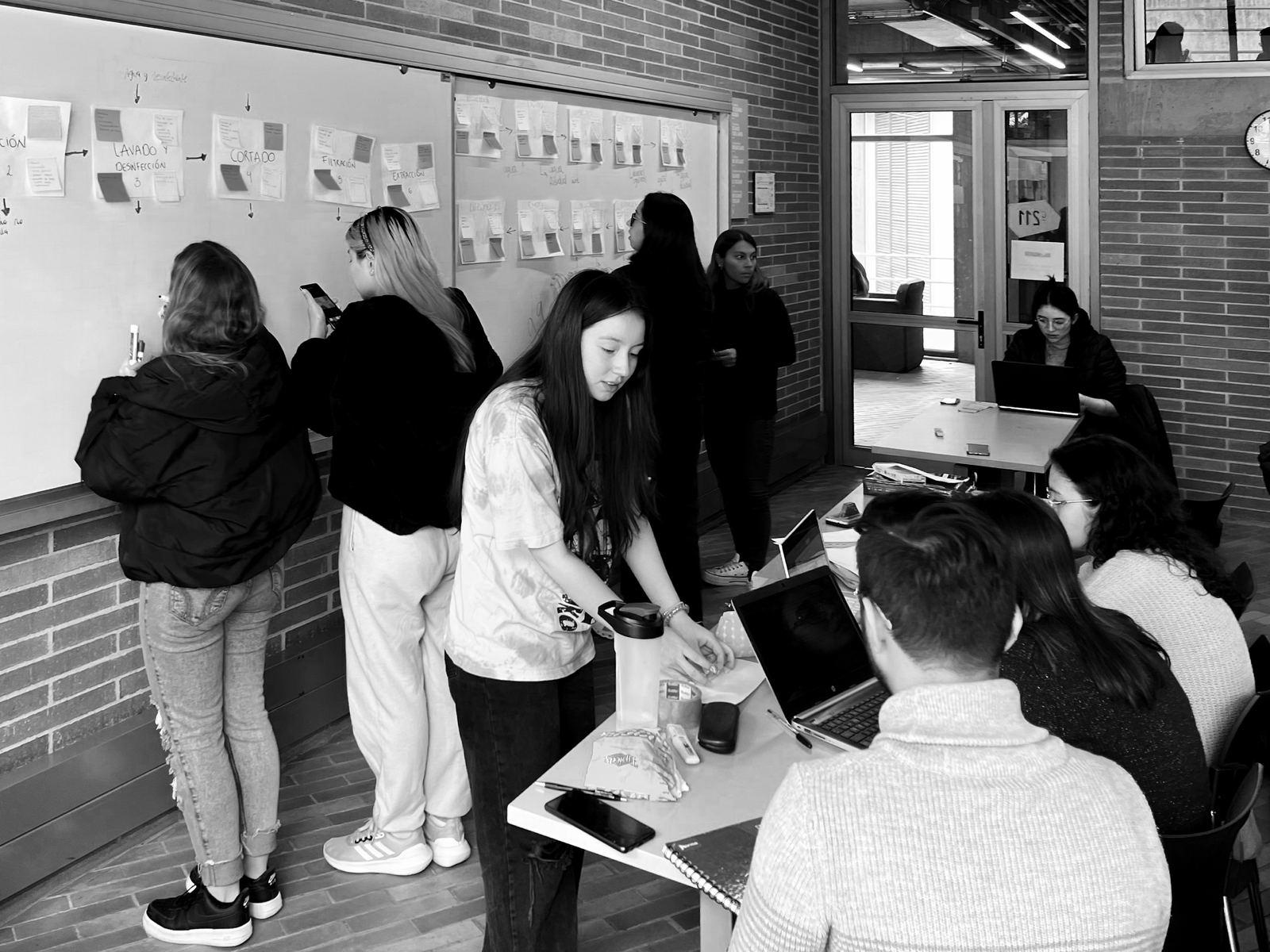
Nearly all my courses revolve around a project, and Integrated Product and Process Design (DIPP, from its Spanish name), the design philosophy of the Department of Chemical and Food Engineering, gives it its structure. Teams solve company challenges in the Chemical Engineering Challenge and the ChemFood Challenge, design a whole plant in the Unit Operations Project, brew their own beer in From yeast to beer and improve an enzyme in silico in Systemic Design of Bioproducts.
Simulators.
For the Unit Operations Project I built 12 interactive simulators and a manual of engineering diagrams. They let students look inside a stirred tank, a centrifugal pump or a distillation column while they change the variables, and check what they see with the methods of the course.
Each one opens in a new tab, with no access code. They are the ones the students use in the course classroom, in the order of the semester.
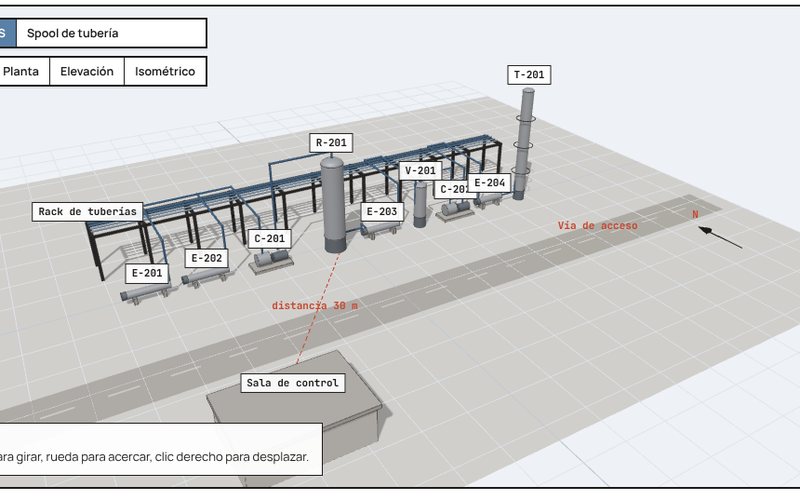
Manual of engineering diagrams 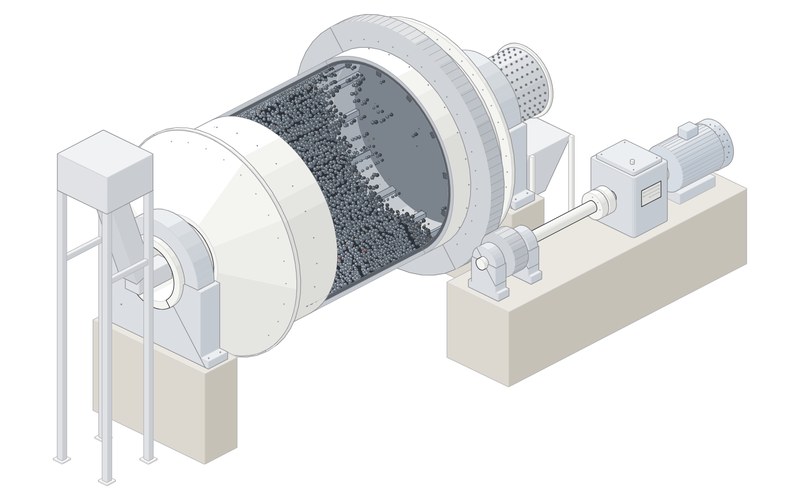
Milling and sieving explorer 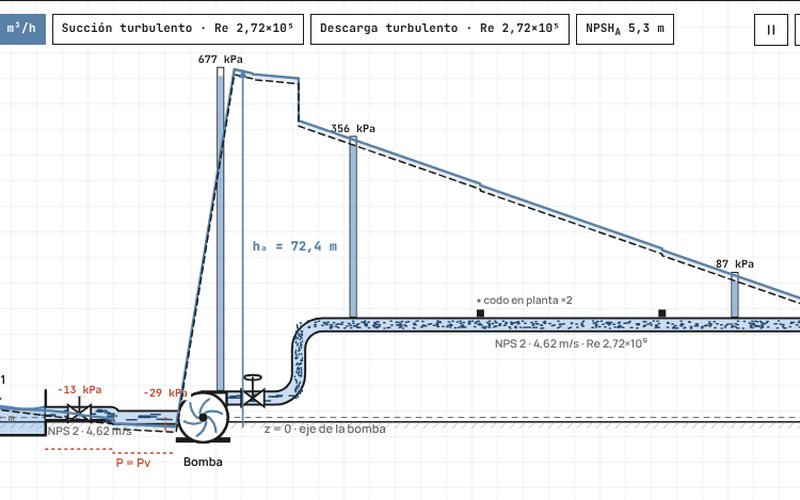
Bernoulli explorer 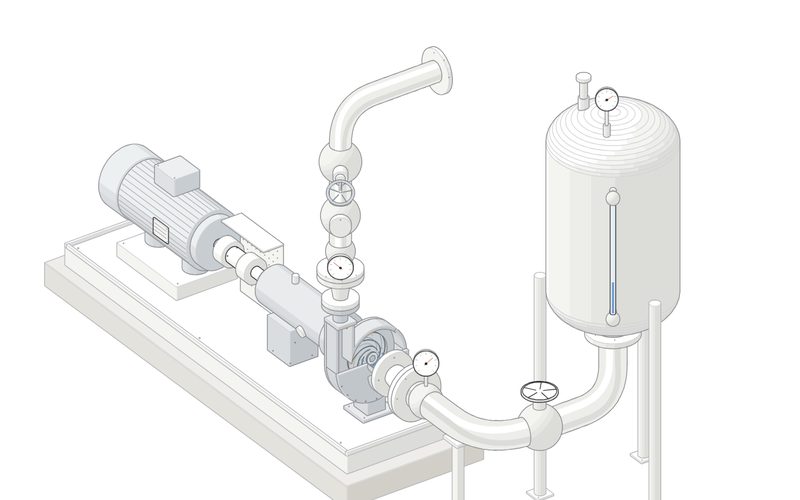
Centrifugal pump explorer 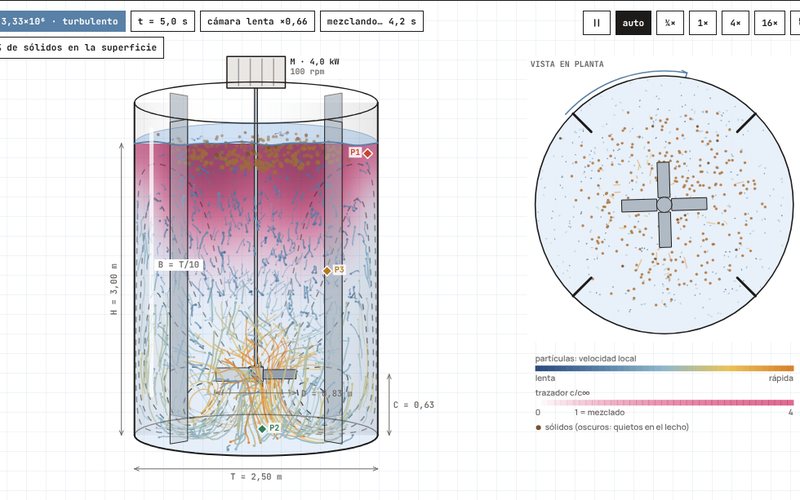
Agitation explorer 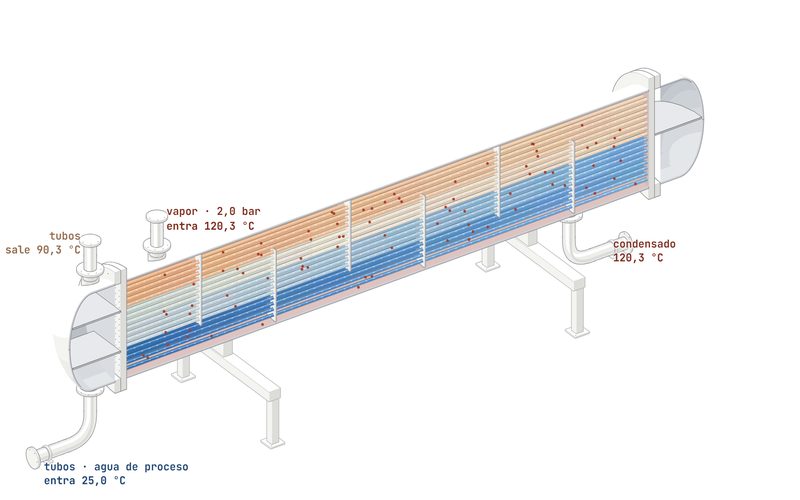
Heat exchanger explorer 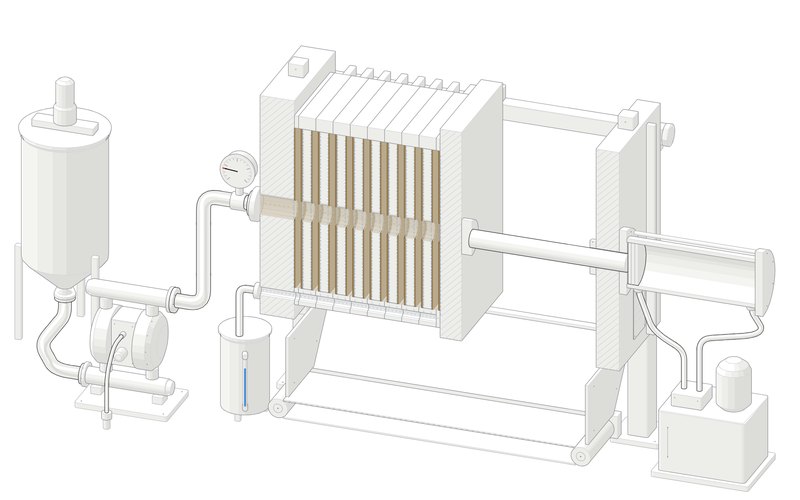
Filtration explorer 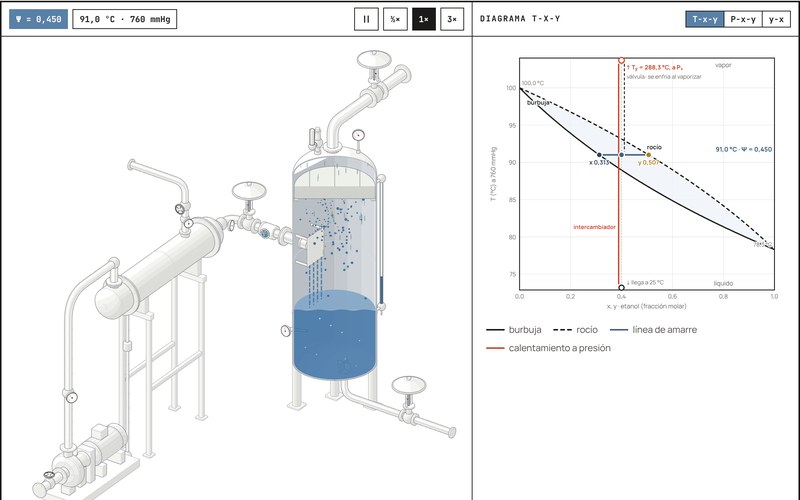
Phase equilibrium and flash explorer 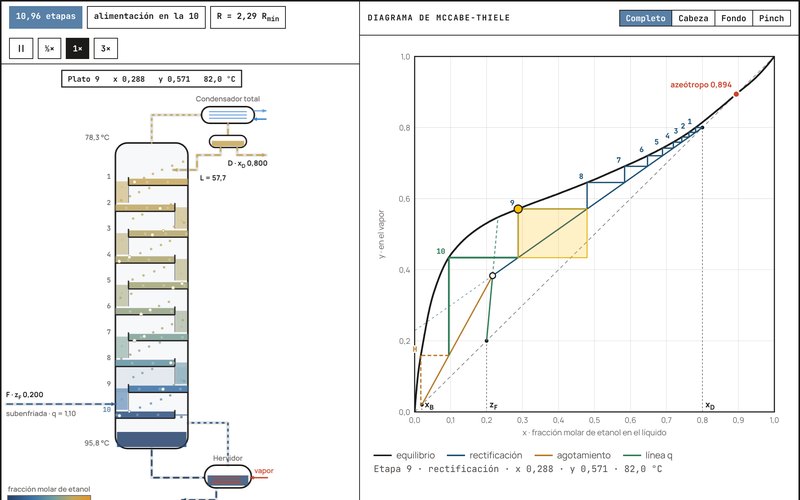
McCabe-Thiele explorer 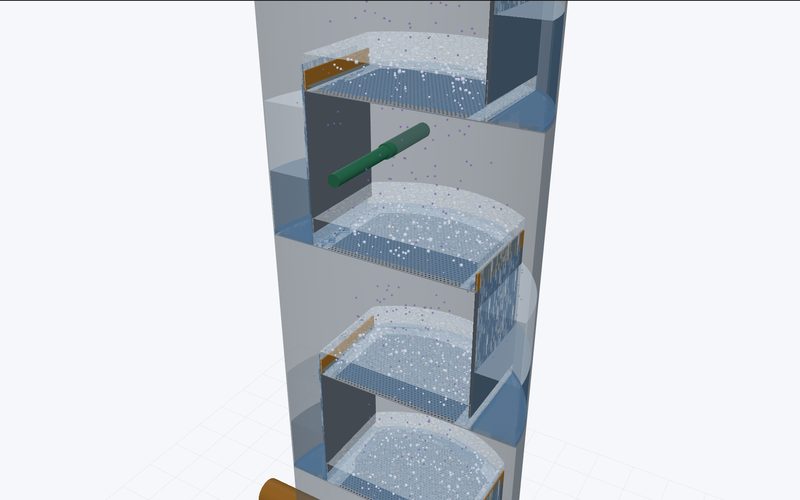
Tray tower in 3D 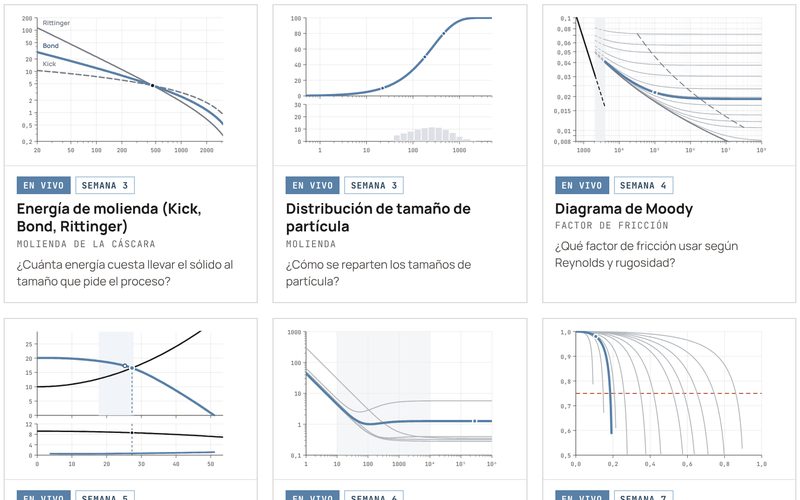
Chart explorer 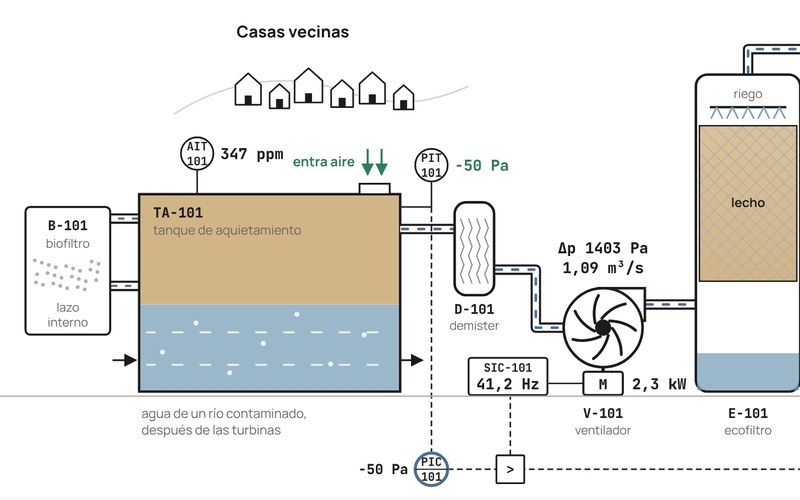
Ecofilter (biotrickling filter) explorer 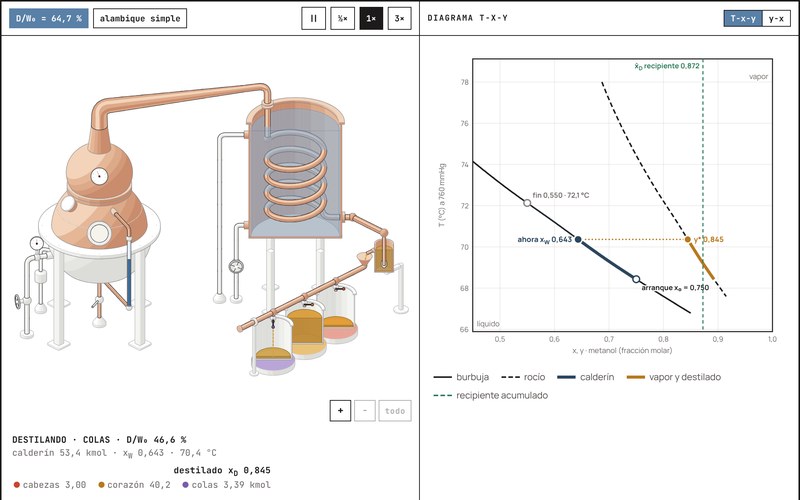
Batch distillation explorer
Listen or read before class
Since the e-book and videos of Unit Operations, in 2017, my flipped courses ask students to prepare each topic before they arrive. In 2025-20 I made the podcast Gradiente de Ideas for the Unit Operations Project, published on Spotify: I wrote the scripts of conversations between fictional characters who take unit operations to cases from real companies, such as Asahi Kasei Corporation, Bel Star S.A. (Belcorp), Empresas Públicas de Medellín E.S.P. (EPM), Cenit Transporte y Logística de Hidrocarburos S.A.S. (Cenit) and Scotch whisky distilleries: diagrams, powder handling or whisky distillation. The voices were generated with ElevenLabs, and David Santiago Ramos did the mixing. In 2026-20 I replaced the podcast with interactive readings written for the course.
Debate with evidence
In Industrial Biotechnology, since 2020, students debate ethical dilemmas and have to defend a position with scientific evidence. Pandora’s Lab runs on conversations and debates about the cases in which science went wrong, with seven guests each semester. Experimental Design had a session on bias in research.
Teams with their own rules
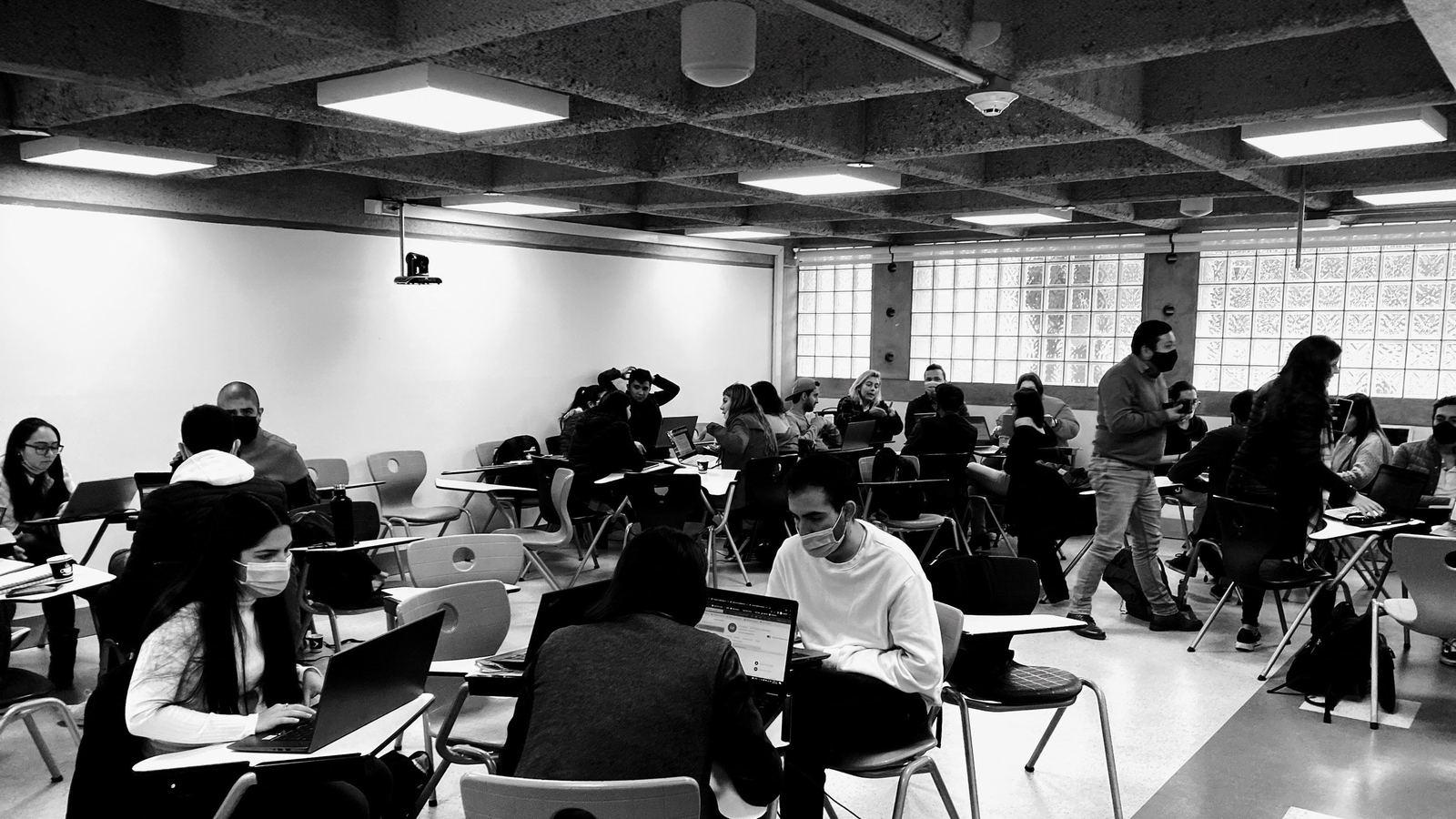
The teamwork guide I put together with Óscar Álvarez and Diego Pradilla, from two courses I took (Building Innovative Teams, from Stanford Continuing Studies, and Assessment in Higher Education, from Erasmus University Rotterdam, on Coursera), starts from the idea that good teamwork depends more on norms than on who the members are. Each team agrees on its norms and builds the matrices it uses for self- and peer assessment, on four axes: commitment, contribution, communication and cooperation. A team contract and follow-up minutes go with it, and the teams rotate so students learn to work with people they did not choose.
Write and present
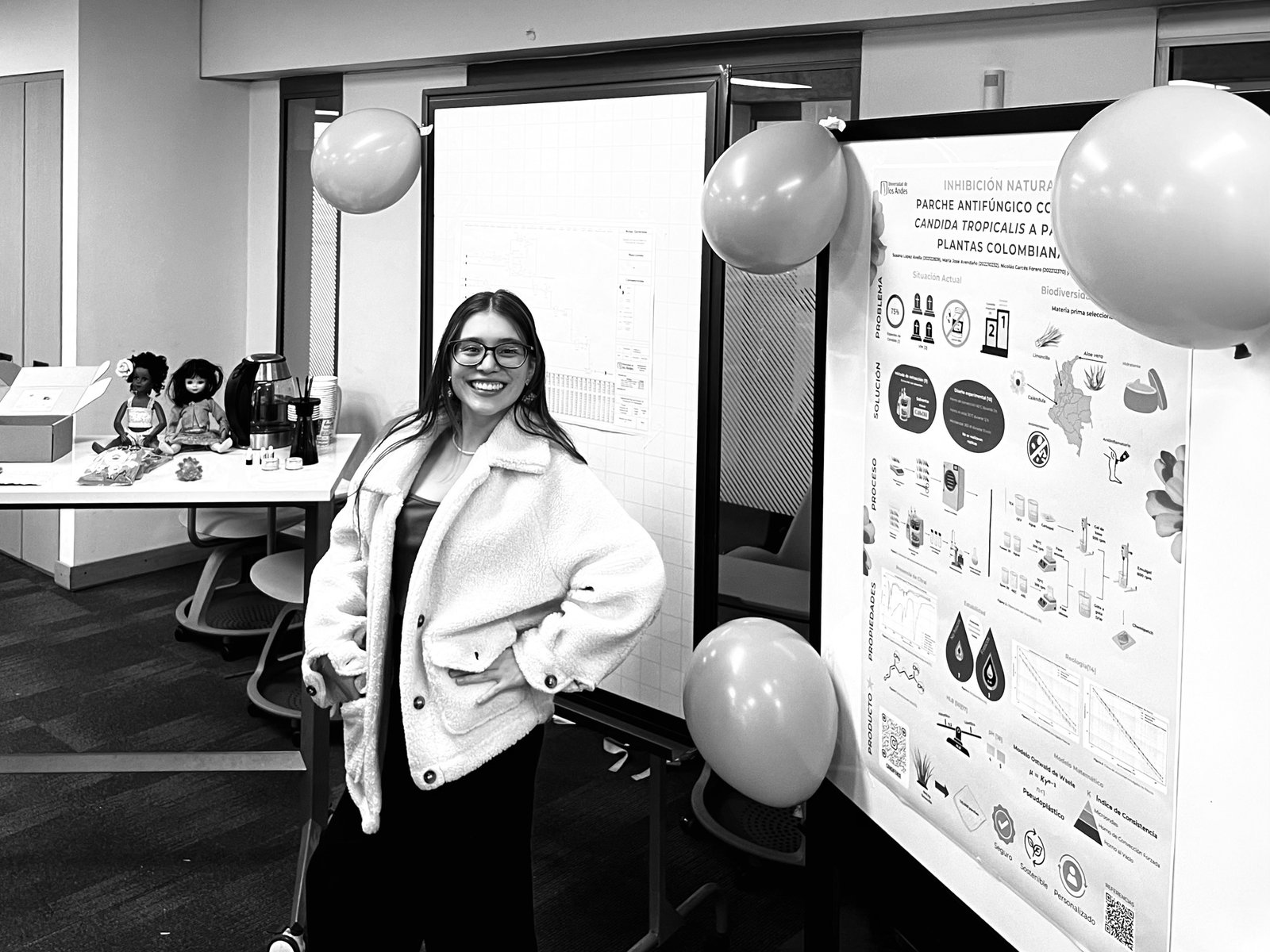
Several of my courses are type E (writing) courses, with the support of the University’s Centro de Español for technical writing. Students write reports, proposals and opinion columns, such as the MicroBlogs Alimentarios, and present posters, flyers and pitches to juries that sometimes include people from industry.
Play
There was a treasure hunt with prizes in Unit Operations, excellence bonuses, points with a leaderboard in the Unit Operations Project and prizes for the best poster.
Artificial intelligence, with rules
Since 2023-20 my students have used generative artificial intelligence under the AI Assessment Scale (AIAS), which states for each activity how much use is allowed, and since 2025-20 every deliverable carries a declaration of use. Industrial Biotechnology and the seminar have workshops on using it in research.
What we have studied about itThe materials.
I have tried many ways of making materials for my students. For Unit Operations, when I arrived, we made an e-book of seven modules; later I used Microsoft Sway, Adobe Illustrator and Adobe’s online documents, and later still the artifacts of AI assistants. Today everything is on a website of my own, the classroom of this site. I build it with the help of generative artificial intelligence.
What the Unit Operations Project has there in 2026-20: